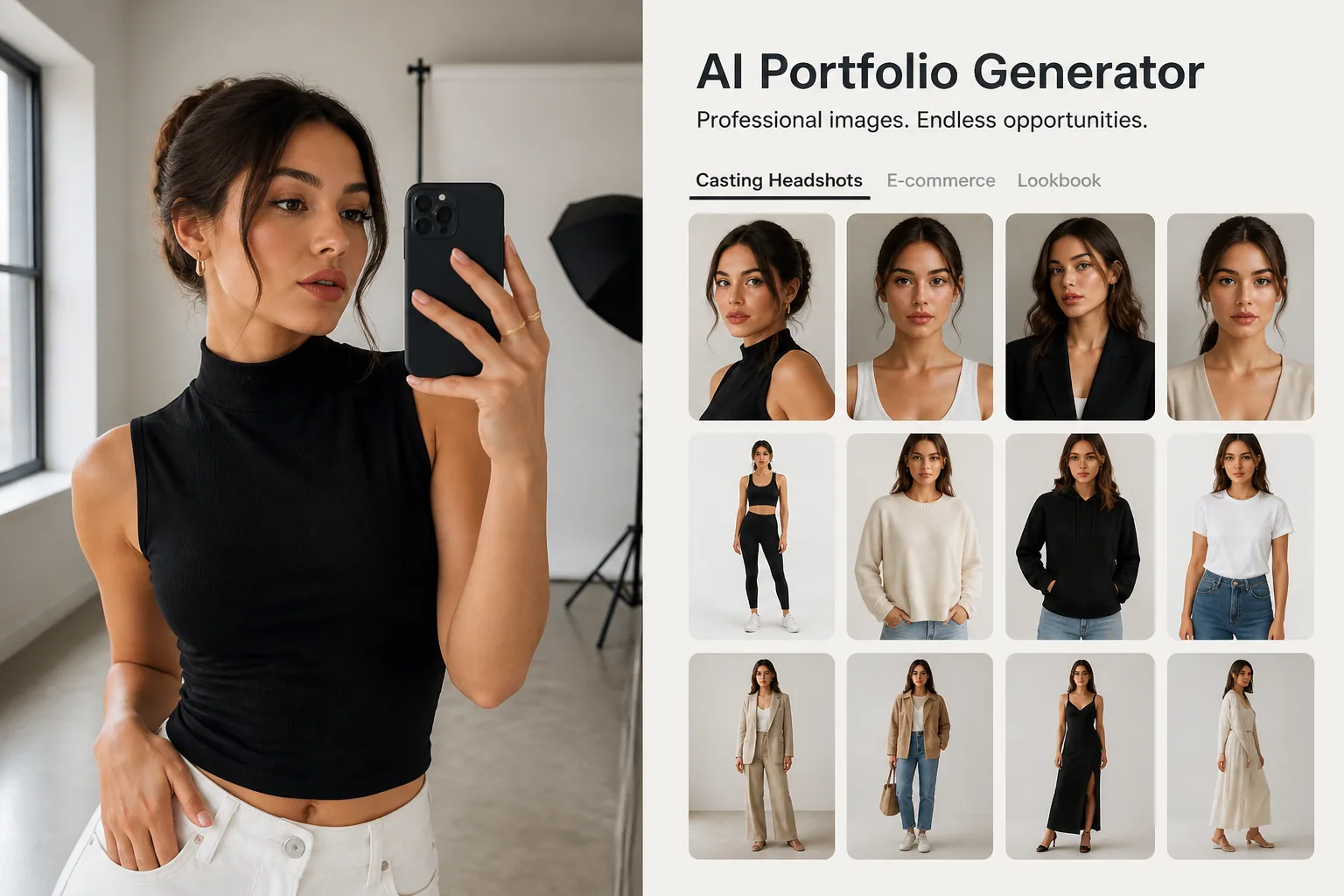
Working Behind the Selfie: How AI Photo Generators Are Changing Modeling, Casting, and E-Commerce
AI portrait tools are no longer just a novelty for social posts or profile pictures. In modeling, casting, and fashion e-commerce, they are becoming a practical way to test looks, speed up concept development, and create more visual options before a real shoot even happens. For aspiring models, influencers, photographers, and small brands, the real opportunity is not to replace traditional photography, but to work faster and more strategically around it.
That shift matters because image-driven industries have always rewarded speed, range, and clarity. Agencies want clean submissions that show type and versatility. Casting teams want to understand fit in seconds. Brands want believable visuals that can be adapted across campaigns, product pages, and seasonal concepts. AI-generated selfies and portraits can support all of that when they are used with intention, strong taste, and a realistic understanding of what these industries actually value.
Why AI Portraits Matter in Modeling, Casting, and E-Commerce Now
The timing is not accidental. Generative AI is moving into commerce fast. Presenc AI reports that 80% of retail and consumer packaged goods companies are actively using or piloting generative AI as of May 2026, which shows how quickly synthetic visuals are becoming part of the commercial workflow. At the same time, adoption is still uneven. Stord reports that while 51% of US consumers have used AI for online shopping, only 7% of organizations say they have reached fully scaled deployment of AI systems in commerce. That gap creates a very practical opportunity for creators and small teams who can experiment without the overhead of enterprise production. Sources: https://presenc.ai/research/ai-in-retail-and-ecommerce-statistics-2026 and https://www.stord.com/newsroom/stord-releases-2026-state-of-ai-in-ecommerce-report
In modeling and casting, AI portraits are especially useful because first impressions happen so quickly. Casting directors often make keep-or-pass decisions from thumbnails in under three seconds, based on expression, lighting, brand fit, and type clarity. That means a strong image is less about decoration and more about communication. If a portrait helps show who someone is and what they can do, it can be valuable. If it confuses the viewer, the image works against the submission.
E-commerce is also changing because shoppers are already comfortable with AI-assisted discovery. Product.ai reports that 43% of online shoppers used AI tools for product research in the past 90 days, and 86% of those cross-checked AI recommendations with another source before buying. That is a useful reminder: people do not necessarily reject AI, but they do want confidence, proof, and consistency. The same principle applies to AI portraits in brand work. Synthetic images can be effective when they feel believable and are supported by real product detail, clear labeling, and a trustworthy brand presentation. Source: https://product.ai/research/trust-in-ai-commerce-report/
What Agencies, Casting Directors, and Brands Really Look For Beyond Looks
A common mistake is to assume agencies and brands only care about beauty. In practice, they are looking for usefulness. A face may be attractive, but if the portfolio lacks range, if the lighting is inconsistent, or if the subject cannot read clearly in a thumbnail, the submission is weak. Modeling agencies often prioritize portfolio submissions that show range and versatility, with clean, well-lit lead headshots, minimal wardrobe, and clear type definition. One agency-focused guide even notes that 8 distinct looks can be more valuable than 25 minor variations of the same look. That logic matters a lot in an AI context, where it is easy to generate endless near-duplicates without adding real portfolio value. Source: https://www.photographyshark.com/blog/top-10-things-modeling-agencies-are-looking-for/
Casting directors are even more direct. A headshot has to tell the story fast. They are scanning for expression, personality, lighting, and whether the image feels right for the role or brand. If an AI portrait is overly polished, too symmetrical, or visually generic, it may read as artificial even when the viewer cannot explain why. The best use of AI is not to create a fake version of perfection, but to create images that communicate professional readiness, presence, and range. Source: https://www.photographyshark.com/blog/what-casting-directors-look-for-in-a-great-headsho/
For brands, the same principles apply. They want visuals that match their audience, channel, and price point. A luxury label may want elegance and restraint. A fitness brand may want energy and motion. A direct-to-consumer beauty brand may want clean skin texture, controlled lighting, and a feeling of accessibility. AI can help explore those directions before committing budget to a physical shoot, but it only works when the output still feels aligned with the brand story.
Where AI Selfies Fit Into the Modern Portfolio Workflow
Think of AI selfies as a pre-production layer, not a final destination. They are most useful when they help answer questions early: What look should we test? What mood feels right? Which wardrobe or setting supports the brand? Which direction makes the subject look credible and marketable? Instead of waiting until a full shoot day to discover that a concept is off, creators can use AI to narrow options first.
That makes the portfolio workflow much more efficient. A model or influencer can start with a few base selfies, generate a range of looks, then review which images best support their type, niche, and goals. A photographer can use synthetic portraits to pitch a style direction to a client. A small brand can test campaign concepts before booking talent or location. In each case, the AI image is a planning tool that helps reduce waste and improve decision-making.
The important part is to treat the generated image as a draft of brand language. Does it feel like the person or product the audience is supposed to trust? Does it show range without becoming inconsistent? Does it support the kind of work you want more of? If not, it is just noise. If yes, it becomes a useful asset in the larger portfolio system.
How Aspiring Models and Influencers Can Create Portfolio-Ready AI Images
For aspiring models and influencers, the biggest advantage of AI portraits is experimentation. You can test different aesthetics without paying for every variation as a separate shoot. That includes professional business portraits, casual lifestyle looks, editorial-inspired scenes, fitness imagery, formalwear, and seasonal concepts. The point is not to pretend those images prove your entire range. The point is to help you understand and present your strongest commercial identity.
A smart workflow starts with a few high-quality selfies that capture your face clearly from different angles and lighting conditions. From there, create a set of images that stay believable and consistent. Choose styles that fit your actual goals. If you want work in beauty, your AI portraits should emphasize skin clarity, expression, and facial structure. If you want lifestyle or travel partnerships, create images that feel relaxed, aspirational, and brand-friendly. If you want commercial or corporate work, clean backgrounds and minimal distractions usually matter more than dramatic effects.
This is also where a tool like Selfie AI: AI Photo Generator can be useful. It lets you turn ordinary selfies into polished portraits and stylized looks, including business portraits, beach scenes, formalwear, fitness styles, and more, while also supporting custom prompts and high-definition results. Used carefully, that kind of flexibility can help you create a more deliberate visual story before you invest in a full real-world shoot: https://findthe.app/selfie-ai-0xi7wd
Still, the goal is not to flood your profile with AI images. A better strategy is to use a small number of strong portraits that look like they belong in the same professional universe as your real photos. That way, your feed, comp card, or submission materials feel coherent instead of random.
Using AI Portraits for Casting Tests, Moodboards, and Look Development
Casting tests are one of the most practical places to use AI portraits because they are fundamentally about communication. A casting team wants to know whether a subject can carry a character, match a brand tone, or fit into a visual universe. AI portraits can help you preview that fit before a submission or a meeting.
For actors and models, this can mean generating variations that resemble different emotional temperatures: approachable, intense, elegant, youthful, confident, editorial, or commercial. You can also test how a haircut, wardrobe change, makeup direction, or background affects the impression you make. If the AI version of a concept looks right, that is a clue that a real shoot in that direction may be worth pursuing.
Moodboards are another strong use case. Creative teams often need a shared visual reference before production starts. AI portraits can quickly fill gaps in a board, especially when the team is exploring a new demographic, seasonal campaign, or hard-to-source location vibe. One recent hybrid production example even used studio product photography alongside AI-generated synthetic models selected through an AI casting process, showing how these workflows can coexist in commercial campaigns. Source: https://sauer.marketing/en/case-studies/hybrid-ai-production-ai-models-replace-photoshoot/
Look development is where AI becomes especially powerful. Instead of debating abstract concepts, you can generate several versions of a look and compare them side by side. That makes decision-making easier for stylists, photographers, and brand teams. It also keeps the conversation focused on outcomes instead of guesswork.
How Small Brands Are Using AI for Product Mockups and Model Visualization
For small brands, one of the biggest barriers to growth is visual production cost. Hiring talent, booking a studio, sourcing locations, and reshooting content for every channel adds up quickly. AI portrait tools can reduce that burden by helping brands visualize how a product might look in different contexts before committing to full production.
A skincare brand, for example, can test how a campaign might feel with different model types, ages, or skin tones. A fashion startup can preview product presentation across more inclusive casting options. A jewelry label can explore close-up lifestyle compositions without immediately scheduling multiple shoots. When used honestly, this can save time and help teams make better decisions about real-world photography.
The key is that AI mockups still need product truth. If a garment, bottle, or accessory does not exist in the real world, the synthetic image should not misrepresent it. A good workflow uses AI to explore framing, mood, and talent direction, then combines that with accurate product visuals, clear copy, and real specifications. That is how synthetic media becomes a business tool rather than a credibility problem.
Balancing AI Images With Real Photos for Trust and Credibility
Trust is the central issue in every AI image strategy. Consumers are increasingly exposed to synthetic visuals, but they are not blind to the risk. Clutch found that 57% of consumers failed to correctly identify AI-generated photos, even though 66% felt confident they could. That tells us two things at once: AI can be surprisingly persuasive, and people are not always as good at spotting it as they think. Source: https://clutch.co/press-releases/ai-imagery-survey-2025
That is exactly why balance matters. Real photos give a portfolio, brand page, or campaign authority. AI portraits can add range, preview ideas, and fill gaps, but they should not become the only source of truth if you want long-term credibility. The strongest portfolios and brand systems usually mix synthetic and real materials in a way that makes sense for the audience.
A practical rule is to let real photos anchor the identity and let AI extend the possibilities. Real images can show genuine texture, verified wardrobe, actual products, and authentic behavior. AI images can explore future concepts, alternate looks, and seasonal directions. Together, they create a fuller picture without pretending that one can completely replace the other.
This is also why disclosure matters. If AI played a meaningful role in the creation of a commercial image, audiences should not be misled about what they are seeing. The more the image influences a purchase, a casting decision, or a professional judgment, the more important transparency becomes.
Consistency, Diversity, Realism, and Versatility: The New Quality Checklist
If you want AI portraits to be useful in professional settings, quality has to be judged by more than aesthetics. A modern checklist should include consistency, diversity, realism, and versatility. Consistency means the subject still looks like the same person across images. Diversity means the set does not feel repetitive. Realism means the skin, lighting, proportions, and environment hold up under scrutiny. Versatility means the images can actually serve different business goals.
For models and influencers, this means building a portfolio that shows multiple roles without diluting identity. For brands, it means selecting visuals that can travel across web, social, paid ads, and marketplaces without breaking trust. For photographers, it means using AI where it helps concepting and workflow, not as a shortcut around understanding light, composition, and audience expectations.
The best AI image sets usually look intentional. Wardrobe changes feel planned, not random. Expressions are varied but coherent. Backgrounds support the message instead of stealing it. And most importantly, the portraits still pass the basic professional test: they feel believable enough to be useful.
Legal, Licensing, and Likeness Rights Every Creator Should Understand
The legal side is not optional. Right of publicity laws in U.S. states such as New York, Tennessee, Arkansas, and California are being amended or have already been enacted to address AI-generated likenesses, synthetic performers, and digital replicas. That means the law is catching up to the technology, and creators cannot assume that old consent language covers new uses. Source: https://www.foley.com/insights/publications/2026/03/how-ai-digital-doubles-and-new-laws-are-rewriting-fashion-and-beauty/
New York’s AI Transparency in Advertising and Synthetic Performer Disclosure Law went into effect on June 9, 2026, and requires clear consumer disclosure whenever synthetic performers or AI digital replicas are used in commercial ads. That is a major signal for brands and creators: if synthetic media is part of the message, disclosure may be required and is often the safer ethical choice anyway. Source: https://www.foley.com/insights/publications/2026/03/how-ai-digital-doubles-and-new-laws-are-rewriting-fashion-and-beauty/
Licensing language also matters. Legal risk increases when model releases or talent contracts are vague about scope, duration, or medium, especially if a brand later uses AI to extend likeness beyond the original agreement. If you are generating portraits based on your own face, or using AI in a client workflow, the permissions around training, editing, redistribution, and commercial use should be clear before publication. Source: https://studio.apiway.ai/blog/legal-likeness-model-releases-ai-fashion
In short, if the image can influence money, reputation, or representation, treat the rights conversation seriously. AI convenience does not erase consent requirements.
Risks, Red Flags, and Ethical Questions Around AI-Generated Faces
There are some obvious red flags. If an AI portrait distorts identity, implies a false physique, overstates beauty standards, or creates a misleading commercial impression, it can damage trust quickly. The same is true if a portfolio becomes so dependent on synthetic images that the person behind them no longer feels real to casting teams or clients.
Ethically, there is also the question of pressure. AI can make it tempting to chase an idealized face that never exists in the real world. That can be harmful in industries already shaped by unrealistic expectations. A healthier approach is to use AI to expand possibility, not erase individuality. The point should be to make people easier to understand, not harder to recognize.
Another red flag is inconsistency between the image and the offer. If the portrait looks like a luxury campaign but the product is entry-level, audiences may feel misled. If the image suggests a human model participated in a shoot that never happened, that can also create confusion. Good AI practice is less about visual trickery and more about clear intent.
A Practical AI Workflow for Photographers, Creators, and E-Commerce Teams
A simple workflow can keep things organized. First, define the goal. Are you creating a submission portfolio, a casting concept, a product mockup, or a campaign test? Then collect a small set of reference selfies or base images that reflect the subject accurately. Next, generate only the variations that serve the brief, rather than chasing endless outputs.
After that, review the images with a professional eye. Check face consistency, hands, clothing realism, lighting logic, and whether the image communicates the intended audience. Remove anything that feels too synthetic, too generic, or too misleading. Then combine the strongest AI images with real photos, product shots, or verified campaign assets so the final presentation remains grounded.
For e-commerce teams, this workflow is especially useful when paired with fast testing. You can mock up different body types, ethnicities, wardrobe directions, seasonal themes, or background settings before spending on a physical reshoot. That helps teams move quickly while still protecting brand standards and compliance requirements.
The smartest teams use AI to shorten the path to a better real-world decision. They do not use it to avoid judgment. They use it to sharpen it.
What the Future of Selfie AI Means for Breaking In and Staying Competitive
Selfie AI is changing the entry point into image-heavy careers. People who once needed access to studios, expensive tests, or repeated content shoots can now prototype their visual identity much faster. That does not remove the importance of real photography, but it lowers the friction of starting, iterating, and presenting ideas with confidence.
For models and influencers, the future will likely reward those who combine authentic presence with strategic visual experimentation. For photographers, it will reward those who understand how to direct both real and synthetic production. For brands, it will reward teams that can balance speed, creativity, and transparency without losing trust.
AI photo generators are not ending the need for human talent. They are changing how talent is discovered, tested, and presented. The people who win in this environment will be the ones who understand both sides: how to use synthetic images creatively, and when to rely on reality to prove credibility. That balance is what will keep portfolios strong, campaigns believable, and brands competitive in the next phase of visual culture.