Why “Imperfect” Is the New Perfect: How Embracing Flaws Makes Your AI Selfies More Memorable
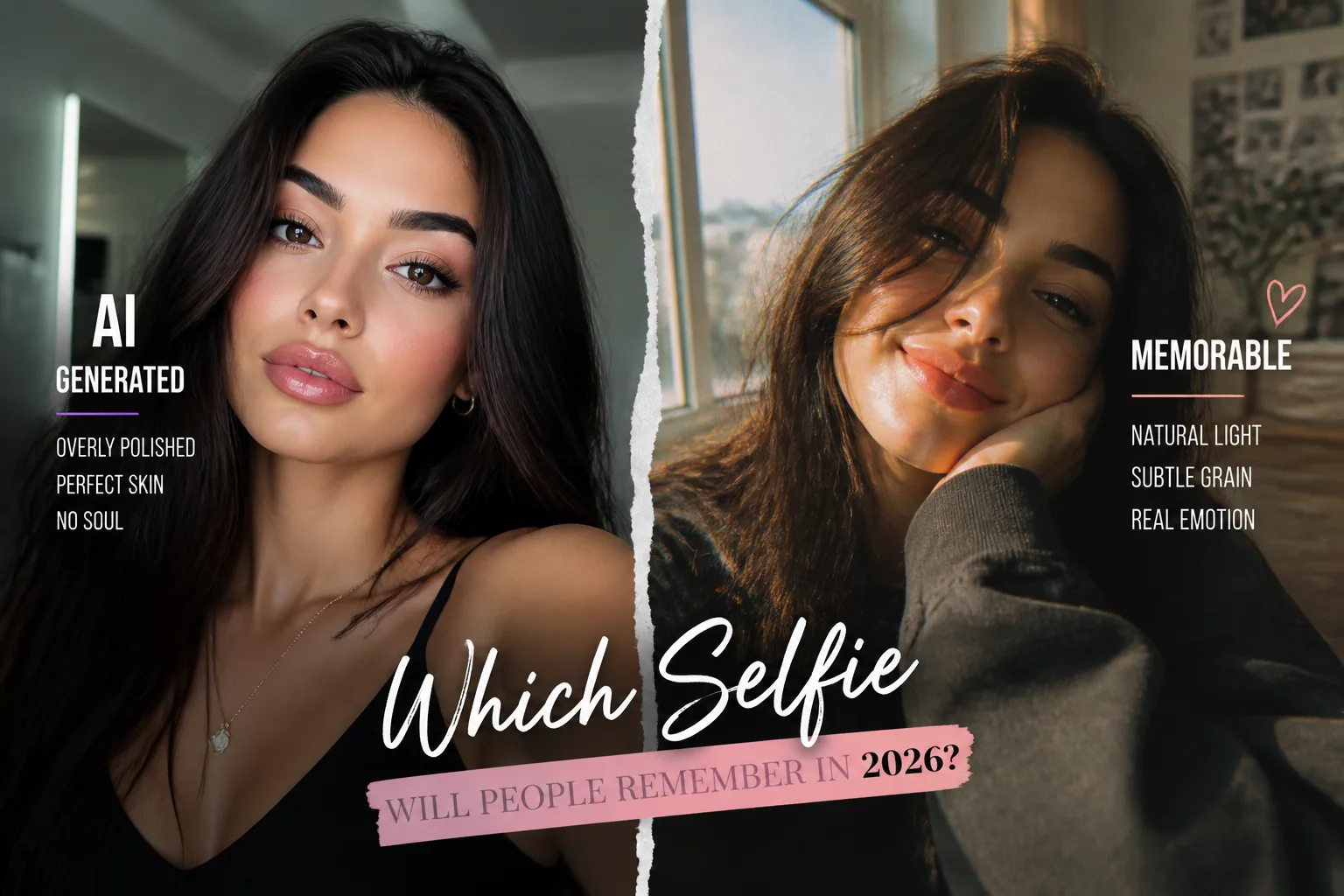
For a while, hyper-polished AI selfies were impressive simply because they looked so impossible. Perfect skin, symmetrical features, flawless lighting, and studio-clean finishes made people stop scrolling. But by 2026, that level of polish is starting to blend into the background. In crowded feeds, perfection can feel generic, while texture, emotion, and small visual irregularities feel fresh, believable, and human.
That shift is not just aesthetic. It reflects a broader creative movement toward warmth, rawness, and individuality. The result is a new rule for AI portraits: if you want people to remember you, you often need to look a little less manufactured and a little more alive.
Why Perfect AI Selfies Are Starting to Feel Forgettable
The problem with overly polished AI portraits is not that they are unattractive. It is that they often feel too controlled. When every detail is optimized, the image can lose the tiny cues that make a face feel like a real person with a story. Viewers may admire the result, but they do not always connect with it.
That is why “perfect” is beginning to read as predictable. AI-generated faces with identical lighting, smoothed skin, and rigid symmetry can feel interchangeable across different creators. Once people recognize the formula, the emotional impact drops.
Research is pointing in the same direction. AI After40 reported that images that appear fully AI-generated without human touch saw over a 40% drop in click-through rates, while grain, texture, and visible flaws improved perceived authenticity and engagement. In other words, the more a portrait feels hand-touched by reality, the more likely people are to pause and respond.
The 2026 Shift Toward ‘Less Perfection, More Human’
The move away from polish is part of a bigger cultural reset. Canva’s 2026 Design Trends report identified Imperfect by Design as a central creative movement for the year, describing it as a willingness to let go of the pressure to polish every single detail and instead embrace texture, rawness, and emotional expression. That mindset is showing up everywhere from social graphics to portraiture.
In photography and digital identity, the new standard is not flawless appearance but believable presence. AI Headshots Blog noted that natural expressions, relaxed posing, and preserved facial texture are now seen as more trustworthy than stiff, heavily retouched corporate portraits. Meanwhile, photographers surveyed by Aftershoot described the most impactful images as those that feel like a memory already lived, with softer lighting and less obsession with sharpness.
This is why the trend feels so compelling. It does not reject beauty. It simply redefines beauty as something more emotionally legible, more tactile, and more specific to the person being portrayed.
What Kinds of Imperfections Make Portraits Feel Real
Not every flaw has the same effect. The most effective imperfections are the ones that make an image feel observed rather than manufactured. Think of the subtle things that happen in real photography: a little motion blur, imperfect eye contact, soft shadows, slightly uneven framing, or a natural expression that is not frozen into a perfect smile.
Texture also matters. Preserving skin detail, pores, freckles, faint lines, and natural variation can make a portrait feel grounded. Cutout Partner’s 2026 retouching trends report says viewers are increasingly responding negatively to overly smoothed faces, while realism and tactile texture are becoming stronger differentiators.
Then there are the atmospheric imperfections. Light leaks, grain, soft focus, and gentle blur can add mood and storytelling depth. These elements do not just make the image look older or more analog. They make it feel like something happened in the frame. That sense of event is part of what creates memory.
Trending AI Selfie Styles: Film Grain, Blur, Soft Focus, and Light Leaks
One of the most noticeable shifts in 2026 is the rise of aesthetics that borrow from film photography and editorial imperfection. Grain is making a comeback because it adds texture and emotional warmth. Soft focus is being used not to hide a face, but to give it a more intimate and reflective quality. Motion blur can suggest movement, spontaneity, and presence instead of static posing.
Light leaks and color shifts are especially useful when you want to create a nostalgic or dreamy mood. They make an AI selfie feel less like a product shot and more like a captured moment. DIY Photography notes that candid moments, unpolished lighting, and even photographic mistakes are being used deliberately in 2026 to convey atmosphere and authenticity.
Pinterest Predicts 2026 also reinforces this broader appetite for visual irregularity. Its Glitchy Glam trend points to rising interest in asymmetry, mismatched elements, and color imbalance, with strong search growth around avant-garde beauty styles. The message is clear: people are no longer only chasing clean, symmetrical perfection. They are interested in visuals that feel distinctive enough to have a personality.
Why Flaws Create Emotion, Relatability, and Better Engagement
The emotional advantage of imperfection is simple. Real people are not perfectly lit, perfectly posed, or perfectly symmetrical all the time. When an AI portrait includes subtle flaws, it reduces distance between the viewer and the image. That reduction in distance makes the portrait easier to trust and easier to remember.
This matters a lot in social media, where users decide in seconds whether a post feels relatable, aspirational, or fake. More than half of UK internet users, 56%, prefer brands that show real people and imperfections in advertising rather than staged or polished imagery, according to Mintel reporting cited by Cosmetics Design Europe. The same logic applies to personal branding. People often engage more when they see personality rather than perfection.
Muse Trend’s AI Model Trends Q1 2026 report suggests the effect is measurable too. AI personas with freckles, visible pores, and asymmetry reportedly achieve around 40% higher user retention than “perfect” faces. That makes sense. Imperfections create distinctiveness, and distinctiveness helps memory. Memory helps engagement. Engagement helps reach.
How to Prompt AI Tools for Imperfection Without Losing Your Identity
The key to using imperfection well is control. You want the portrait to feel imperfect in style, not broken in identity. That means you should prompt for atmosphere and texture while keeping your core facial traits stable.
A good prompt usually includes three layers. First, define the identity clearly: facial shape, hair, age range, expression style, and any signature features that should remain recognizable. Second, define the visual treatment: film grain, soft focus, natural lighting, subtle motion blur, candid expression, or light leak effects. Third, define what should stay untouched, such as realistic proportions, consistent facial structure, or recognizable eyes and smile.
If your tool allows it, use references or a personalized model to preserve likeness. That way, the imperfections become a styling choice rather than a risk to consistency. If you are experimenting with custom scenarios, a tool like Selfie AI: AI Photo Generator can be useful because it lets you upload a few selfies to create a personal AI model and then apply custom prompt-based looks while maintaining your likeness.
A useful prompt pattern would sound something like this: create a natural portrait with visible skin texture, soft window light, subtle film grain, slight motion blur, relaxed expression, and an honest candid mood, while preserving facial identity and realistic proportions. The point is to add character without losing you.
Style Settings and Editing Choices That Add Human Texture
If you are refining AI selfies after generation, focus on edits that support warmth rather than perfection. Lowering contrast slightly, adding a gentle vignette, reducing sharpness just enough to soften edges, or introducing fine grain can all make a portrait feel more tactile. Even small color decisions matter. Slightly warmer tones often feel more human than sterile cool whites.
Composition also changes the emotional tone. Imperfect posing, where the subject is turned a little away from the camera or caught mid-laugh, feels more alive than a centered, symmetrical, pageant-style pose. Natural asymmetry in shoulders, head angle, or gaze direction can make a huge difference.
Creative Bloq notes that brands are leaning into tactile textures, blurred typography, gradients, softer focus, and motion-driven systems to signal warmth and humanity in highly polished digital environments. Portrait editing is moving in the same direction. The goal is not to degrade quality. It is to create a human feel that quality alone cannot deliver.
When Imperfect Selfies Work Best for Social Media and Personal Branding
Imperfect AI selfies are especially effective when your goal is connection rather than authority. They work well for creator profiles, lifestyle posts, storytelling content, behind-the-scenes branding, emotional announcements, and campaigns where you want people to feel close to you.
They are also strong when the post needs a sense of moment. A grainy portrait with a soft smile may communicate reflection better than a flawless studio headshot. A blurred, candid frame may feel more inviting than a rigid, centered image. These qualities can make your content feel less like an ad and more like a lived experience.
For beauty, fashion, and lifestyle accounts, this can be a major advantage. The more crowded the feed becomes, the more valuable an image becomes if it feels specific, human, and emotionally resonant.
When a Clean, Polished AI Portrait Still Makes More Sense
That does not mean imperfection is always the right answer. There are plenty of situations where a cleaner portrait is still the better choice. Corporate bios, executive headshots, professional services, formal announcements, and high-trust brand contexts may still benefit from a more polished presentation.
The difference is intent. If your audience needs clarity, authority, or immediate professionalism, a refined portrait can support that goal. In these cases, you may want to preserve realism while keeping the image crisp, composed, and understated rather than visibly stylized.
Think of polish as one tool and imperfection as another. One communicates control. The other communicates presence. A strong visual strategy knows when to use each.
How to Find the Right Balance Between Authentic and Intentional
The best AI selfies in 2026 are not the most perfect ones or the most distorted ones. They are the ones that feel intentionally human. That usually means preserving enough realism for trust, while adding enough texture for character.
A good rule is to ask two questions. First, does this image still look like me? Second, does it feel like a real moment rather than a generated object? If the answer to both is yes, you have probably found the right balance.
In practice, that balance often looks like this: recognizable face, natural expression, subtle flaws, tactile detail, and a mood that supports the story you want to tell. Imperfection should never be random. It should be expressive. When used well, it makes your AI selfies more memorable because it makes them more human.