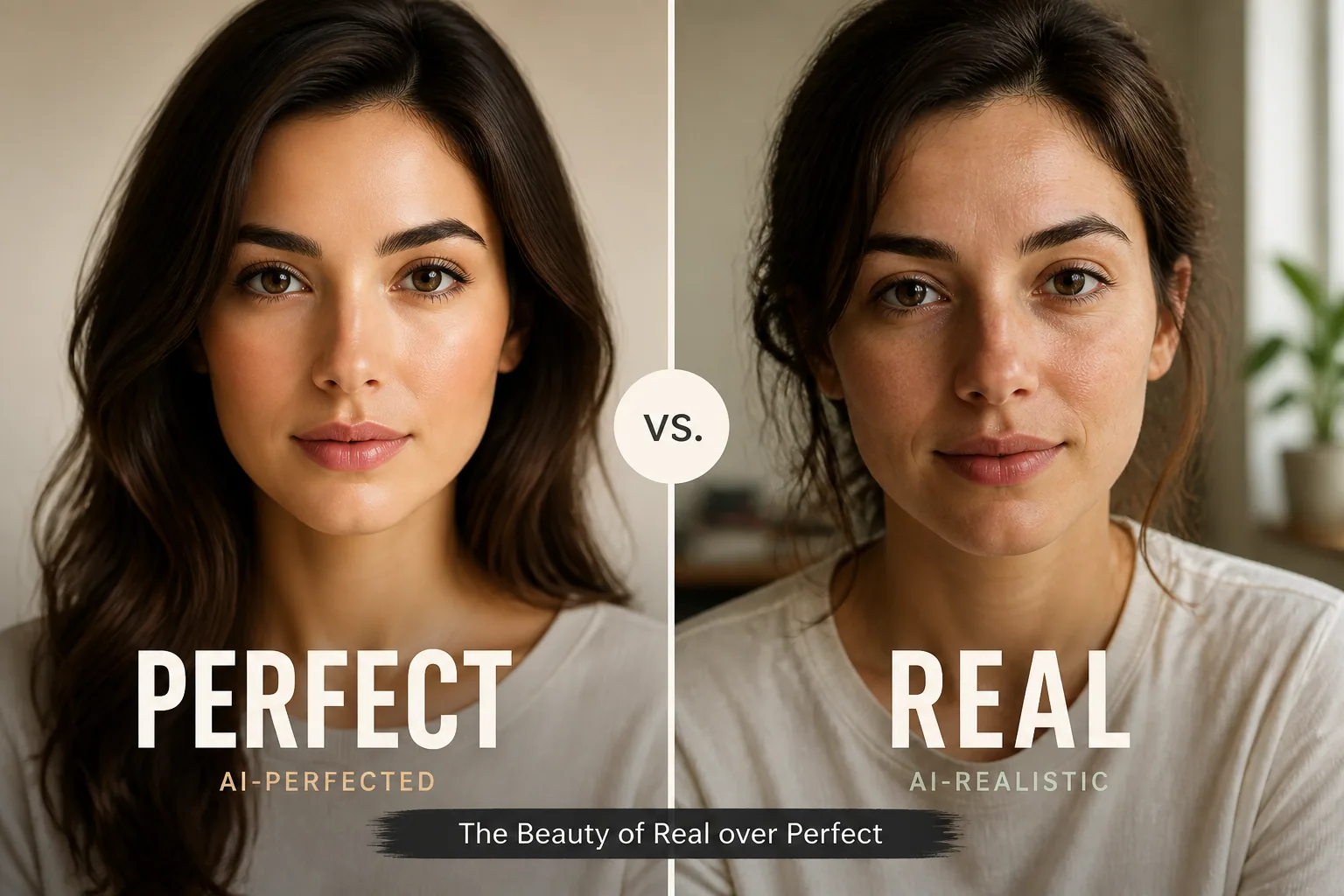
What Audiences Really Want: Behind the Popularity of Imperfect-Looking AI Portraits
Perfect is no longer the default winner. Across social media, dating apps, and personal branding platforms, audiences are responding more strongly to AI portraits that look a little less polished and a lot more human. Natural skin texture, subtle asymmetry, soft shadows, stray flyaways, and even small blemishes can make an image feel believable in a way that glossy, airbrushed faces often do not.
That shift matters because people are not just looking at portraits anymore. They are reading them as signals. A face can suggest confidence, honesty, approachability, status, warmth, or even deception. When an AI portrait feels too flawless, viewers often sense that something is off. When it keeps some imperfection, it tends to feel more relatable, more trustworthy, and sometimes even more attractive.
This is the new authenticity premium. The more a portrait feels like a real person rather than a synthetic ideal, the more audiences seem willing to engage with it.
Why Imperfect AI Portraits Are Having a Moment
The popularity of imperfect-looking AI portraits is not just a style trend. It is a reaction to years of visual overproduction. For a long time, online imagery rewarded smooth skin, dramatic lighting, symmetrical features, and an almost impossible level of refinement. But that same polish started to create distance. Instead of making people feel closer, it often made profiles and brand visuals feel generic, staged, or suspiciously manufactured.
AI intensified that effect. Once generative tools made it easy to produce flawless faces, the internet quickly filled with portraits that looked technically impressive but emotionally empty. Many of them shared the same glassy eyes, over-soft skin, and hyper-even lighting. The result was not stronger identity. It was sameness. And when everything looks refined, nothing stands out.
Imperfection restores distinction. A few pores, a slight smile imbalance, a shadow falling unevenly across the cheek, or a naturally imperfect pose can give a portrait a sense of lived-in reality. That is exactly what many viewers now want, especially in contexts where trust matters more than fantasy.
The Authenticity Premium: What Studies Say Audiences Prefer
The research is catching up with what many creators already sense intuitively. A 2023 study found that when avatar endorsers included small aesthetic imperfections, such as freckles or blemishes, consumers perceived greater authenticity and psychological closeness to the brand. In other words, a face that looked a little less perfected felt a little more human, and that translated into stronger connection: https://doi.org/10.1016/j.jbusres.2023.114125
That same logic appears in wider visual research. A preregistered study of 1,200 U.S. participants found that aesthetic appeal in visuals increased perceived credibility in social media posts, while production quality alone did not significantly affect credibility. That is an important distinction. Audiences do not necessarily reward the most polished image. They reward the image that feels visually pleasing and believable at the same time: https://arxiv.org/abs/2605.26309
There is also an interesting effect in face perception research. A Nature Scientific Reports study found that partially obscured or incomplete faces were often judged as more attractive than fully visible faces, likely because viewers mentally fill in missing information. That helps explain why slight ambiguity, soft shadow, and imperfect detail can make a portrait feel more engaging rather than less: https://www.nature.com/articles/s41598-019-56437-4
Taken together, the studies point to a clear pattern. People do not simply prefer perfection. They prefer images that leave room for human interpretation.
From Airbrushed to Human: The Backlash Against Over-Polished AI Faces
Over-polished AI faces trigger a familiar reaction: they look attractive, but not trustworthy. When skin is too smooth, eyes are too symmetrical, and lighting is too even, the image can slide into the uncanny valley of personal branding. The face may be visually impressive, yet it becomes harder to believe as an actual person.
This is why the backlash against hyper-retouched images has accelerated. People have spent years seeing edited selfies, filtered influencers, and brand visuals that promise authenticity while clearly hiding reality. AI portraits that repeat the same glossy formula can feel like one more layer of visual dishonesty.
In practical terms, the audience is often asking a simple question: would this person really look like this in real life? If the answer feels too obviously staged, engagement drops. If the face preserves enough imperfect detail to pass as a real photographic moment, people relax and pay more attention.
That is especially true for creators, founders, and small brands. When the goal is to build a relationship, not just display an image, viewers want a portrait that feels present, grounded, and accessible.
Avatar and Portrait Trends Driving Demand for Texture, Realism, and Personality
Recent trend reporting shows a clear shift toward ultra-natural AI portraits on platforms like LinkedIn and Instagram, where users now favor visible pores, soft lighting, subtle expression, and no beauty filters. The emphasis is not on perfection but on trustworthiness and individuality: https://www.eweek.com/news/ai-profile-picture-trends-2026/
That shift is also visible in avatar design more broadly. As synthetic faces have become more common, audiences have grown more sensitive to visual sameness. If every AI profile picture shares the same cinematic glow and flawless complexion, viewers stop reading those images as personal identity markers. Texture becomes a differentiator. Personality becomes a competitive advantage.
There is also a platform-specific context here. On dating apps, for example, the use of fully synthetic profile images increased significantly between early 2023 and mid-2025, but those profiles tended to underperform when authenticity was visible. A report citing a Stanford HCI study noted that AI-enhanced but still photographic images received more right-swipes than unedited photos, while fully synthetic faces saw a decrease in match rate when users knew the images were AI-generated: https://www.alibaba.com/product-insights/are-ai-generated-profile-pictures-trending-on-dating-apps-or-making-users-seem-less-authentic.html
That difference is important. People may appreciate enhancement, but they still want proof of a real person behind the picture.
The Psychology of Trust: Why Flaws Make Faces Feel More Believable
Human beings are highly attuned to facial signals. We make rapid judgments about warmth, competence, confidence, health, and sincerity based on tiny visual cues. When a face is too perfect, those cues can feel flattened. A little imperfection reintroduces the complexity that real faces naturally have.
A small flaw can work as a credibility anchor. It tells the viewer that the image is not trying too hard to convince them. Freckles, slight under-eye texture, asymmetry in the eyebrows, or uneven light on the skin can all make a portrait feel more like an observation and less like a fabrication.
This is especially relevant for brand avatars and creator headshots. A face that feels believable can create psychological closeness, which supports trust, follow-through, and recall. That is why aesthetic imperfection tends to work best when the goal is relationship building rather than aspiration. The face is not simply a visual asset. It is a social cue.
At the same time, there is a limit. Too much distortion, blur, or awkward asymmetry can make a portrait feel careless rather than natural. The sweet spot is human variation, not visual damage.
High-Gloss vs. Textured Portraits: What Changes Audience Perception
When you compare a high-gloss AI portrait with a textured one, the differences often seem subtle at first. But those subtle choices can dramatically change how an audience interprets the image.
A high-gloss portrait usually has smoother skin, brighter eyes, more symmetrical composition, stronger glow effects, and highly controlled lighting. It can look polished, premium, and aspirational. But it also risks feeling generic or over-engineered.
A textured portrait usually keeps more skin detail, more natural shadow variation, softer lens behavior, and more asymmetry in the face or expression. It often feels calmer, more grounded, and more believable. The image may be less magazine-like, but it is often more human.
This difference matters because audience perception changes with context. For a luxury campaign, high gloss may still be appropriate. For a founder bio, creator profile, relationship-based marketing post, or dating image, texture often wins because it reduces social distance.
The key is not to make the image look low quality. The key is to preserve signs of life.
How to Create AI Portraits That Feel Natural, Not Artificial
If you want your AI portraits to feel more authentic, the first step is to stop asking for perfection. Instead of overloading the prompt with words like flawless, cinematic, ultra-soft, model-like, or airbrushed, describe the portrait the way a good photographer would describe a real session.
Think in terms of natural light, realistic skin texture, candid expression, and subtle asymmetry. Ask for a photograph that looks captured, not manufactured. That change alone can produce much better results.
It also helps to choose style references carefully. Editorial does not have to mean over-processed. Documentary, natural portrait, environmental headshot, and soft daylight portrait can all produce more believable results than heavy beauty or glamour styling. If the platform allows it, use prompts that encourage photographic realism rather than synthetic perfection.
One practical option is to use a tool designed for customizable portrait generation, like Selfie AI: AI Photo Generator, especially if you want a wide range of looks while still keeping control over the final style: https://findthe.app/selfie-ai-0xi7wd
Prompt Tips for Preserving Skin Texture, Asymmetry, and Expressive Detail
Good prompts are specific about what should stay imperfect. If you want natural results, include details that encourage realism. For example, mention visible skin texture, soft facial asymmetry, gentle under-eye shadows, natural smile lines, and a realistic lighting setup. Those cues push the model away from plastic-looking outputs.
It can also help to describe expression rather than pose. Words like thoughtful, relaxed, slightly amused, mid-conversation, or candid usually produce more believable portraits than rigid terms like confident, idealized, or perfect smile. A real face is expressive because it is doing something, not just existing for the camera.
Another useful tactic is to request mixed lighting conditions. Even lighting can look clean, but slight directional light or soft window light often creates a more authentic facial structure. Shadows give faces dimension. Dimension creates realism.
Avoid prompt stacking that over-controls the result. If you ask for too many beauty enhancements at once, the image often becomes smooth, glossy, and less personal. The more human you want the portrait to feel, the more room the system needs to interpret naturally.
Which Imperfections Help, and Which Ones Hurt
Not all imperfections are equal. Some build trust. Others simply make the image look poor or awkward.
Helpful imperfections usually include natural skin texture, light freckles, minor blemishes, slight asymmetry in the eyes or mouth, realistic hair flyaways, uneven lighting, a relaxed posture, and a genuine expression. These details reinforce the sense that the portrait came from a real moment.
Harmful imperfections include bad anatomy, distorted hands, warped teeth, strange eye spacing, overblurred skin, obvious artifacts, and unnatural facial geometry. Those are not trust signals. They are quality failures.
The difference is crucial. Authenticity is not the same as sloppiness. A portrait should look unretouched, not broken. If the imperfections distract from the person, they have gone too far.
When to Use Imperfect vs. Polished Portraits in Branding, Dating, and Professional Profiles
Context determines the right amount of realism. In branding, imperfect portraits often work best when the message is about approachability, community, expertise, or honesty. Think coaches, consultants, creators, founders, and small brands that rely on trust.
In dating, the balance is even more delicate. A slightly enhanced but still photographic image can help people present their best self without breaking trust. But fully synthetic portraits can backfire if the audience feels misled. The challenge is not to look perfect. It is to look like yourself on a very good day.
In professional profiles, especially on LinkedIn, viewers usually prefer clarity and competence over glamour. That is why ultra-natural AI portraits are becoming more common. They offer polish without pretending to be something else.
For luxury, fashion, or aspiration-led campaigns, polished visuals still have a role. In those settings, refinement itself is part of the promise. But even there, some texture can prevent the image from becoming sterile.
So the question is not whether imperfections are good or bad. It is what the image needs to accomplish.
The Ethics of Over-Filtering: Honesty, Expectation, and Audience Trust
There is an ethical dimension to all of this. When an image is too heavily filtered or too heavily generated, it can create expectations the real person cannot sustain. That gap between image and reality is where trust breaks down.
This matters in branding because people buy from people. It matters in dating because authenticity affects emotional consent and first impressions. It matters in professional contexts because credibility is partly visual. If the portrait implies a version of someone that is not materially recognizable, the viewer may feel deceived once they encounter the real person.
The healthiest approach is transparency with intention. You do not need to show every flaw. You do need to avoid presenting an image that promises an impossible standard. A portrait should communicate your best self, not an artificial identity that collapses under contact with reality.
In that sense, imperfect-looking AI portraits are not about lowering standards. They are about aligning image with human truth.
A Practical Before-and-After Checklist for More Authentic AI Portraits
Before generating your final portrait, run through a quick checklist. First, ask whether the skin looks too smooth. If it does, add texture language to the prompt. Second, check the lighting. If it is perfectly even, consider adding soft window light, slight shadow, or environmental variation. Third, inspect the face for symmetry. Real faces are usually balanced, but not mirrored.
Next, look at the expression. Does it feel posed, or does it feel like a real moment? A subtle smile, thoughtful gaze, or natural pause often feels more believable than a broad generic grin. Then check the hair, neck, and edges of the image for signs of overprocessing. If everything is too clean, the picture may read as synthetic even if it is technically beautiful.
Finally, consider the goal. If the portrait is meant to build trust, keep the realism high and the gloss moderate. If it is meant to sell aspiration, allow more refinement, but do not erase all signs of personhood. The best AI portraits are not the most perfect ones. They are the ones that make people feel something real.