How AI Selfies Can Help You Define and Promote Your Personal Style
AI selfies are no longer just a novelty for social feeds. For many personal branding enthusiasts, creators, and visually driven users, they have become a surprisingly useful way to explore identity, test aesthetics, and build a more intentional visual presence. Instead of treating AI portraits as random trend content, you can use them as a creative mirror. They can help you see which moods, colors, silhouettes, and storytelling cues feel like you, and which ones look polished but do not reflect your actual personality.
That shift matters because visual identity has become a real branding asset. The AI headshot and portrait market was valued at about $420 million in 2025, up from $180 million in 2022, and is projected to reach around $640 million by 2028, according to Proshoot AI headshot statistics: https://www.proshoot.co/blog/ai-headshot-statistics At the same time, AI portraits are increasingly accepted in professional settings, with 74% of recruiters in a 2025 blind study rating AI-generated headshots as professional or highly professional, and 58% of professionals reporting they already use or adopt AI headshots in their profiles. So the question is not whether AI portraits are relevant. The real question is how to use them well.
Why AI Selfies Are Becoming a Personal Style Tool
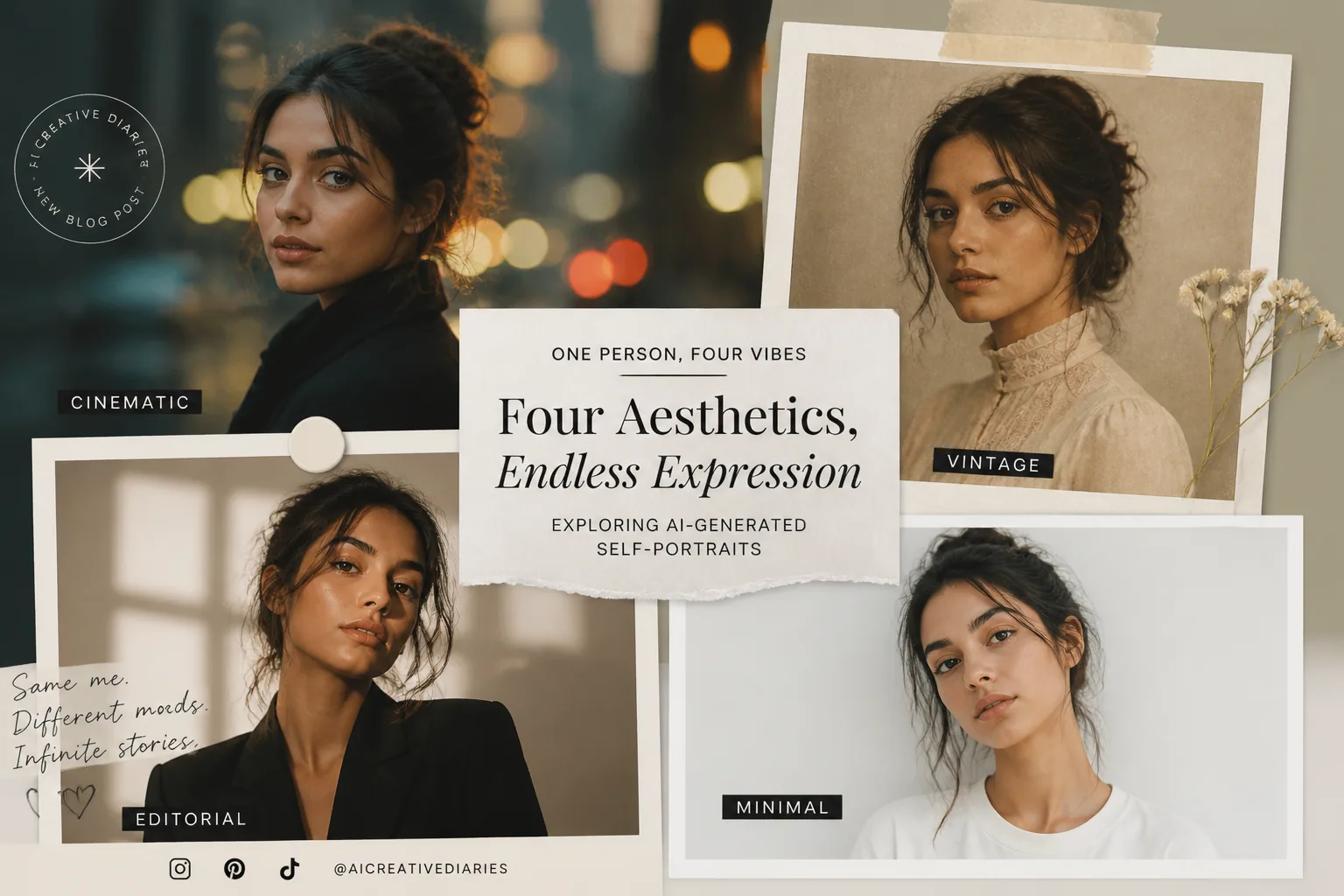
Traditionally, figuring out your personal style meant trial and error in real life. You bought clothes, experimented with makeup, changed your hair, posted a few photos, then slowly learned what felt natural. AI selfies compress that process. They let you test multiple aesthetic directions quickly, from editorial and vintage to cinematic and minimal, without committing to a full wardrobe overhaul or an expensive photoshoot.
That makes them especially valuable for people who build a brand around appearance, taste, or storytelling. A single AI portrait can show whether you feel more authentic in soft natural light or in high-contrast drama, in clean neutral styling or in richly layered textures. It becomes a low-risk way to answer a high-value question: what visual language actually matches the version of yourself you want to present?
There is also a practical reason AI portraits are becoming part of branding strategy. Among professionals, having a profile photo can increase LinkedIn profile views by 21× and connection requests by 9× compared to profiles without a photo, according to Proshoot statistics. In other words, a portrait is not just decoration. It affects visibility, trust, and the first impression you make online.
What Your Favorite AI Aesthetics Say About Your Visual Identity
The aesthetics you keep returning to are often clues. If you always save cinematic portraits, you may be drawn to depth, intensity, and storytelling. If you prefer vintage styles, you may value nostalgia, softness, and a sense of timeless character. If minimal images appeal most, you may be signaling clarity, structure, and restraint. Editorial looks can point to boldness and confidence, while romantic or dreamy aesthetics often suggest emotional warmth and openness.
This is why AI selfies can be more than content. They can act like a visual personality test, except the output is not a score, but a style direction. You start noticing patterns in what feels flattering, what feels aspirational, and what feels like costume. That last distinction is important. Aesthetic attraction does not always equal identity alignment. Sometimes you admire an image because it is beautiful, not because it represents you well.
Academic research on consistent visual identity supports this approach. A study on social media found that consistency in visual identity improves visual appeal, credibility, distinctiveness, attitude toward the brand, reputation, and commitment. That means the styles you choose should not just look good in isolation. They should work together to create a coherent impression over time. Source: https://www.sciencedirect.com/org/science/article/abs/pii/S1755419521000156
Testing Editorial, Vintage, Cinematic, and Minimal Looks
One of the smartest ways to use AI portraits is to test several aesthetics side by side. Editorial styling is useful if you want to communicate confidence, taste, and polish. It often works well for creators, founders, and professionals who want a sharper, more fashion-forward presence. Vintage styling can add character and emotional texture, especially if your brand leans toward nostalgia, art, or slow living. Cinematic portraits are powerful for anyone whose brand includes mood, transformation, or visual storytelling. Minimal looks are ideal when you want the focus to stay on your expression, features, and clarity of message.
The point is not to choose the trendiest option. The point is to compare how each aesthetic changes the story people would associate with you. Do you look more approachable in soft minimal imagery or more memorable in a dramatic cinematic frame? Do ornate vintage details enhance your features or distract from them? Does editorial fashion elevate your presence, or does it make you feel overly performed?
A useful method is to build a small style board from your AI results. Group them by mood, not just by image quality. Note recurring elements such as color palette, lighting, pose, makeup intensity, and wardrobe structure. Over time, the repeated choices will reveal your visual identity more clearly than any single image ever could.
How to Turn AI Portraits Into a Cohesive Personal Brand
Once you identify the styles that fit you best, the next step is consistency. A strong personal brand is not built from isolated attractive images. It comes from a repeatable system. On Instagram, TikTok, LinkedIn, or a personal website, your visuals should feel like they belong to the same person, same energy, and same narrative.
Research on entrepreneurs with clearly defined visual identities on Instagram shows that combining imagery, color, typography, product or display consistency, and narrative coherence tends to build more trust, better brand recall, and longer engagement. Source: https://papers.ssrn.com/sol3/Delivery.cfm/6406599.pdf?abstractid=6406599&mirid=1 This is exactly where AI portraits can help. You can use them to establish a consistent color family, facial presentation, and mood language that carries across posts, bios, highlight covers, banners, and profile photos.
For example, if your AI portraits consistently use muted neutrals, soft shadows, and clean framing, your audience will start associating you with calm sophistication. If your portraits lean into rich contrast, urban backdrops, and expressive styling, your brand may feel more dynamic and cinematic. The value is in repetition. People remember patterns faster than they remember isolated visuals.
If you want to build a professional AI portrait library quickly, a tool like Selfie AI: AI Photo Generator can be a practical place to start, especially because it offers many style categories and custom prompt options: https://findthe.app/selfie-ai-0xi7wd
Using AI Images to Refine Fashion, Colors, and Makeup in Real Life
AI selfies are most useful when they inform real-world decisions. After you generate portraits, do not stop at admiring them. Ask what they are teaching you about your actual appearance and preferences. Are you consistently drawn to cooler tones, or do warm shades make you glow? Do structured jackets and clean necklines suit your face shape more than soft layered fabrics? Does bolder makeup sharpen your presence, or does a lighter approach feel more natural?
These questions matter because style is cumulative. Hair, makeup, accessories, and clothing all influence how your identity reads on camera. AI portraits can help you notice details you might miss in a mirror. For instance, you may discover that a certain lip color gives your face more definition, or that a specific haircut makes your overall look feel more balanced. You may also realize that some aesthetics you love online do not translate well to your own features or energy, which is useful information, not failure.
This is where digital inspiration becomes practical. Take the best elements from your AI portraits and translate them into manageable real-life choices: a consistent color palette, a signature accessory, a preferred makeup finish, or a repeatable outfit formula. That approach is more sustainable than trying to reinvent yourself for every post.
How to Stay Authentic Instead of Copying Trends
The biggest risk with AI-style experimentation is trend-chasing. Because the images can look so polished, it is tempting to keep producing whatever is currently popular rather than what genuinely fits you. But that usually creates a brand that looks impressive for a moment and forgettable later.
Authenticity is not about rejecting aesthetics. It is about filtering them through your own values, personality, and goals. Research on digital entrepreneurship emphasizes psychological self-regulation, including alignment with personal values and management of emotions and motivations, as a key factor in sustaining authentic and consistent personal brands. Source: https://papers.ssrn.com/sol3/Delivery.cfm/6143407.pdf?abstractid=6143407&mirid=1 In practice, that means checking in with yourself before adopting a style because it is viral.
A helpful question is simple: would I still like this look if nobody else were posting it? If the answer is yes, it likely has long-term value for your brand. If the answer is no, it may be better used as a temporary experiment rather than a central identity marker. That mindset helps you avoid looking like a copy of everyone else’s feed.
There is also a trust factor to consider. A 2024 survey found that 66% of recruiters would be put off by a candidate if they recognized their headshot as AI-generated, which highlights the ongoing tension between polished digital branding and perceived authenticity. Source: https://www.robtrendiak.com/blog/personal-branding-headshots-outperform-ai-generated-headshots/ The lesson is not that AI portraits should be avoided. It is that they should be used thoughtfully, with transparency and a clear sense of purpose.
Creators Who Built a Recognizable Style With AI Visuals
Many creators use AI visuals not to replace their identity, but to sharpen it. Personal brand builders, coaches, lifestyle creators, and digital artists often use AI portraits to test a more refined version of their niche. A wellness creator might lean into soft, nature-inspired imagery to reinforce calm and balance. A fashion creator might use editorial-style AI portraits to intensify a luxury or avant-garde angle. A tech founder may prefer clean, minimal headshots that communicate focus and clarity.
What these creators have in common is not the tool itself, but the discipline behind it. They use AI to clarify rather than confuse. Their visuals are recognizable because the same themes recur across their content: similar light, similar palette, similar mood, similar level of formality. That consistency helps audiences understand what the creator stands for before they read a single caption.
This is also why AI can be useful for niche development. If your content sits between categories, such as beauty and entrepreneurship, or fashion and education, AI imagery can help you design a bridge between those worlds. The portrait style becomes a signal that ties your interests together into one memorable presence.
SEO Keywords and Style Adjectives That Attract the Right Audience
If you publish AI selfies or AI portrait content, searchability matters. The right keywords can help you reach people who are already interested in visual storytelling, self-expression, and personal branding. Instead of using vague labels, pair your content with descriptive style terms that match the image and the audience intent.
Useful searchable phrases include cinematic self-portrait AI, vintage AI aesthetic, editorial AI portrait, minimal AI profile photo, moody AI headshot, luxury AI selfie, and polished personal brand portrait. These terms are effective because they combine style with purpose. Someone searching for them is usually not just looking for a random image. They are looking for an identity cue, a mood, or a presentation strategy.
You can also strengthen your SEO by repeating consistent adjectives across titles, captions, alt text, and profile bios. Words like refined, timeless, bold, soft, dramatic, clean, elegant, and expressive help define your lane. The more clearly you describe your visual identity, the easier it becomes for the right audience to find you and remember you.
Best Practices for Posting AI Selfies Across Social Platforms
Different platforms reward different forms of presentation, but consistency still matters everywhere. On LinkedIn, AI portraits should feel professional, credible, and restrained. On Instagram, you have more freedom to create a stylized visual story. On TikTok, a mix of behind-the-scenes content and final images can make your AI process feel more human and engaging. On a personal website, AI portraits can support your overall brand architecture, especially when paired with a matching color system and tone of voice.
A strong approach is to rotate formats while keeping the same identity cues. For example, use one signature aesthetic, then vary the crop, pose, or setting. That way your profile stays recognizable without becoming repetitive. Avoid posting every style you generate just because it looks good. Curation is what turns attractive content into a brand.
It also helps to be transparent when needed. If the image is AI-generated, frame it in a way that supports trust rather than confusion. Many audiences are comfortable with AI creativity when the purpose is clear. What they tend to resist is ambiguity that feels misleading. As AI content becomes more common, the brands that last will be the ones that combine polish with honesty.
Final Tips for Building a Memorable Visual Identity With AI
Use AI selfies as a discovery tool first and a promotion tool second. Start by testing different aesthetics, then observe which ones repeatedly feel aligned with your personality and goals. Build a visual system around those recurring patterns. Keep your colors, lighting, wardrobe cues, and mood consistent enough that people can recognize you instantly.
Then translate those insights into your real-life style, not just your digital output. Let the images inform your clothes, makeup, photography choices, and even your content topics. That is how AI becomes more than a visual trick. It becomes a feedback loop for self-definition.
Most importantly, remember that style is not about copying the most successful feed. It is about making your presence memorable because it feels true. AI can help you explore possibilities faster, but your best visual identity will still come from the qualities that are already yours. When you use it with intention, AI selfies can do something powerful. They can help you look more like yourself, on purpose.