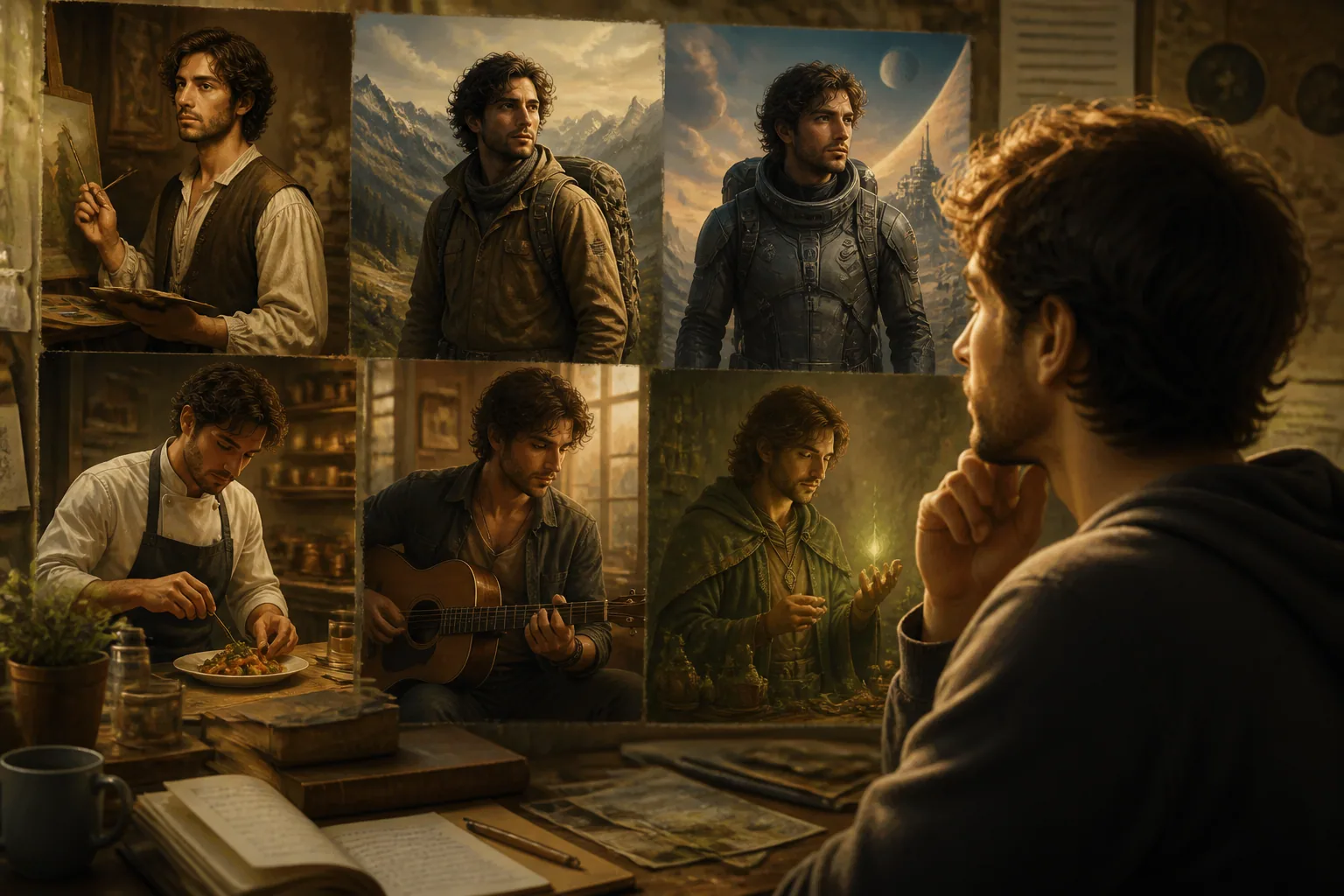
How to Use AI Portraits to Explore Your Hidden Passions & Interests
Most people treat AI portraits like a novelty. You upload a few selfies, choose a style, and enjoy the results for fun or for a polished profile picture. But AI-generated portraits can do something more interesting than make you look good. They can help you notice what you are drawn to, what feels surprisingly right, and what you may secretly want more of in your life.
When you experiment with fantasy worlds, historical eras, careers, travel scenes, or cultural aesthetics, you are not just creating images. You are testing emotional resonance. The portraits that make you pause, smile, feel seen, or want to keep looking can point toward hidden tastes, identity threads, and even future interests. In that sense, AI portraits can become a discovery tool, not just a visual one.
Why AI Portraits Can Be More Than Just Pretty Pictures
There is already evidence that people use AI self-images for more than decoration. A study of 300 Instagram users found that the strongest motivator for creating AI-generated self-portraits was actually FOMO, or the fear of missing out, rather than self-exploration. In other words, many people are using these tools to keep up with trends. Source: https://policyjournalofms.com/index.php/6/article/view/753
That matters, because it means AI portrait platforms sit at the intersection of identity, social pressure, and self-expression. The same tool people use to follow trends can also be used to ask better questions about themselves. If you slow the process down, the images can reveal what feels aspirational, comforting, exciting, or strangely familiar.
A qualitative study on AI-assisted self-portraiture found that participants discovered facets of themselves they did not know existed, including a more mature self and unexpected emotional traits. Source: https://www.researchgate.net/publication/393898321_Reimagining_the_self_Exploring_the_possibilities_of_self-portraiture_with_text-to-image_Artificial_Intelligence_AI
That is the real opportunity here. Not perfection, but revelation. An AI portrait can become a mirror that reflects both who you are and who you are becoming.
The Psychology of Seeing Yourself in New Roles
One reason AI portraits can be so revealing is that they let you safely step into alternate roles. Psychology research on fantasy proneness suggests that people who frequently imagine alternate scenarios or identities often channel that tendency into creativity and better self-knowledge. Fantasy can function as a rehearsal space for identity.
This is also why role-play and avatar customization can feel so powerful. A 2024 study in the Journal of Homosexuality found that customizable avatars in role-playing games helped transgender and gender non-conforming individuals explore identity more safely, and that what someone chooses in fantasy contexts often reflects deeply felt aspirations. Source: https://www.tandfonline.com/doi/abs/10.1080/00918369.2024.2320242
The same principle applies to AI portraits. If you keep choosing a certain aesthetic, such as regal, rebellious, romantic, futuristic, or grounded in nature, that choice is telling you something. You may be responding to a career fantasy, a social identity, a sense of power, or a lifestyle you want more of. The image is not the answer. It is the clue.
Portrait Themes That Can Reveal Hidden Interests
The easiest way to use AI portraits for self-discovery is to explore themes instead of just trying to make a flattering headshot. Different themes tend to activate different kinds of desire and curiosity.
Fantasy worlds are especially useful because they bypass logic and go straight to feeling. If you see yourself as a mage, knight, explorer, sorcerer, or space commander, ask what exactly appeals to you. Is it the power, the beauty, the independence, the mystery, or the sense of being part of a story larger than your current routine?
Historical eras can be just as revealing. Prompts like what would I look like as a Victorian aristocrat, a Mughal noble, or a 1920s jazz-age socialite can unlock emotional resonance with specific periods and cultures. A historical aesthetic might reveal that you love craftsmanship, etiquette, elegance, structure, or expressive social life more than you realized. Source: https://newpromptai.com/historical-ai-prompts-for-gemini/
Career-based portraits can show professional identities you might want to explore. Seeing yourself as an architect, surgeon, chef, scientist, musician, travel writer, or startup founder may spark a very specific feeling. Sometimes the surprise is not that you look convincing in the role, but that the role itself feels energizing.
Travel and location-based scenes can uncover lifestyle desires. If your favorite portraits place you in a sunlit coastal town, a mountain retreat, a neon city, or a quiet library cafe, that may reflect what kind of environment your nervous system prefers. Aesthetic preference often hides a practical desire for pace, atmosphere, and daily rhythm.
Cultural aesthetics can be meaningful too. The key is to approach them with respect and curiosity, not imitation for its own sake. If a certain visual language feels deeply compelling, ask what values you associate with it, such as ceremony, grace, minimalism, vibrancy, community, or spiritual grounding.
How to Write AI Prompts for Discovery, Not Perfection
If you want the portraits to reveal something real, your prompts should leave room for surprise. A useful prompt is not just descriptive. It is open enough to allow the AI to show you possibilities you did not consciously plan.
A prompt guide from ZSky AI recommends including at least five core components: subject description, art style or medium, lighting and camera reference, mood or atmosphere, and technical quality modifiers. Source: https://zsky.ai/blog/ai-portrait-prompts-guide
That structure is helpful, but for discovery, the emotional language matters even more. Instead of only asking for a sleek professional headshot, try framing the prompt around a role, a place, or a feeling. For example, you might ask for a cinematic portrait of me as a thoughtful museum curator at dusk, or a fantasy portrait of me as a quiet forest guardian with an atmosphere of calm power.
You can also use prompt libraries as a starting point and then track which ideas resonate most. Collections of portrait prompts, from neon street hacker to medieval knight at dawn, are useful because they create clear emotional contrast between styles. Source: https://www.prompworld.com/prompts/portrait-prompts
The goal is not to generate the perfect image on the first try. The goal is to create a set of images that each pull on a different thread of your identity. That means you should mix obvious choices with slightly unexpected ones.
For example, you can create one portrait based on how you already see yourself, one based on who you admire, one based on a fantasy version of your future self, and one based on a completely new setting you have never considered. That contrast is often where the insight appears.
What to Notice: Emotional Reactions, Curiosity, and Repeated Patterns
When the images come back, do not just ask which one looks best. Ask which one makes you feel something. The strongest clues often show up in your first reaction.
Pay attention to images that make you feel calm, energized, nostalgic, proud, intrigued, or even slightly emotional. Some portraits may feel aesthetically pleasing but emotionally flat. Others may feel a little imperfect yet strangely compelling. Those are often the ones worth studying.
It also helps to notice where your curiosity goes. Do you zoom in on a portrait because you like the clothing, the setting, the expression, or the atmosphere? The specific feature that keeps drawing you in often points toward a real-life interest, whether that is fashion, travel, photography, history, or a certain kind of work environment.
Look for repeated patterns across multiple images too. If you keep responding to soft natural light, structured clothing, contemplative expressions, old-world architecture, or futuristic minimalism, those preferences are probably not random. They may indicate the visual language you want around you more often.
Some people also discover that they prefer a version of themselves that feels more mature, more playful, more adventurous, or more serene than expected. That does not mean the AI is telling the truth about you in a strict sense. It means your imagination may already know something your daily habits have not fully expressed.
Real Examples of People Who Found New Hobbies or Styles
This kind of discovery is not just theoretical. The research on self-portraiture with AI found that people uncovered unexpected facets of themselves, including emotional traits they had not named before. That is often how new interests begin, first as a visual preference, then as a recurring thought, and eventually as behavior.
A person who keeps choosing portraits in creative studio settings may realize they want more hands-on work, such as photography, design, ceramics, or content creation. Someone repeatedly drawn to athletic portraits may not be chasing a literal sports identity, but a desire for discipline, strength, or a more active lifestyle.
Likewise, someone who loves portraits in elegant historical clothing may discover an interest in vintage fashion, etiquette, costume design, museum culture, or period films. Another person may find that futuristic city portraits awaken an interest in technology, architecture, gaming, or digital art.
The pattern is usually simple. First comes attraction. Then comes repetition. Then comes action. AI portraits can accelerate that process by letting you test multiple identities quickly and safely before committing time or money to a new direction.
How to Journal and Reflect on Your Favorite Portraits
If you want the exercise to go beyond entertainment, keep a reflection journal. Even a short one works well. After reviewing your portraits, write down the ones you keep coming back to and answer a few questions about each.
Ask: What is the first feeling this image gives me? What about this portrait feels like me? What feels aspirational? What do I wish I could step into from this image? What real-life change might connect to this feeling?
It also helps to compare images in pairs. For example, choose the portrait that feels most grounded and the one that feels most adventurous. Or compare the one that feels most powerful with the one that feels most peaceful. The contrast can reveal which need is currently strongest in your life.
A simple reflection framework can be useful: attraction, emotion, pattern, and action. Attraction tells you what caught your eye. Emotion tells you why it mattered. Pattern tells you what repeats across images. Action tells you what to do next.
Turning AI Insights Into Real-Life Experiments
The best use of AI portraits is not to stop at insight. It is to turn that insight into small experiments. If a portrait makes you feel pulled toward a new direction, test it in real life.
If you keep loving a certain fashion aesthetic, try one item from that style in your wardrobe. If a historical portrait fascinates you, watch a documentary, visit a museum, or read a novel from that era. If a travel portrait feels irresistible, start researching destinations that match the mood. If a career portrait keeps standing out, look for a beginner course, podcast, or informational interview in that field.
This is where a product like Selfie AI: AI Photo Generator can fit naturally into the process. It lets you upload a few selfies, create a personalized AI model, and explore everything from superhero looks and beach scenes to historical eras and custom prompts, so you can test different identities and moods quickly. You can find it here: https://findthe.app/selfie-ai-0xi7wd
The point is not to replace real-world exploration. It is to use visual experimentation as a low-friction way to identify what deserves a closer look. Once you notice a pattern, even a small one, you can give it a real-world trial.
From Visual Play to Personal Growth: Building a Discovery Habit
The most useful approach is to treat AI portraits as a habit, not a one-time novelty. Every few weeks, create a small batch of images around a different question. What kind of energy do I want more of? What environment draws me in? What version of myself feels underused?
You do not need a grand identity breakthrough. You only need repeated moments of noticing. Over time, those moments create a map. They can help you see whether you are gravitating toward softness, structure, adventure, elegance, rebellion, spirituality, creativity, leadership, or calm.
This matters because identity is often built in tiny acts of attention. The clothes you save, the scenes you replay, the characters you admire, and the portraits you keep returning to are all part of the same signal. AI just makes the signal easier to see.
There is also value in sharing selected portraits with trusted friends or using them as prompts for conversation. Sometimes other people notice patterns in your images that you have missed. They may see consistency between your visual preferences and your personality, values, or ambitions.
Final Thoughts: Let Your AI Selfies Show You What You Want Next
AI portraits are most interesting when they are used as a doorway rather than a destination. They can show you the aesthetics you love, the roles you secretly admire, and the environments that make you feel more alive. They can also surface interests you have not yet given yourself permission to explore.
So instead of asking only, How do I make this look good? try asking, What does this reveal about me? Which image feels like a memory, even if it is fictional? Which one feels like a future I want to move toward?
If you use AI portraits with that mindset, they become more than digital self-portraits. They become a practical, playful way to understand your hidden passions and turn them into real experiences, new habits, and perhaps even a new version of yourself.