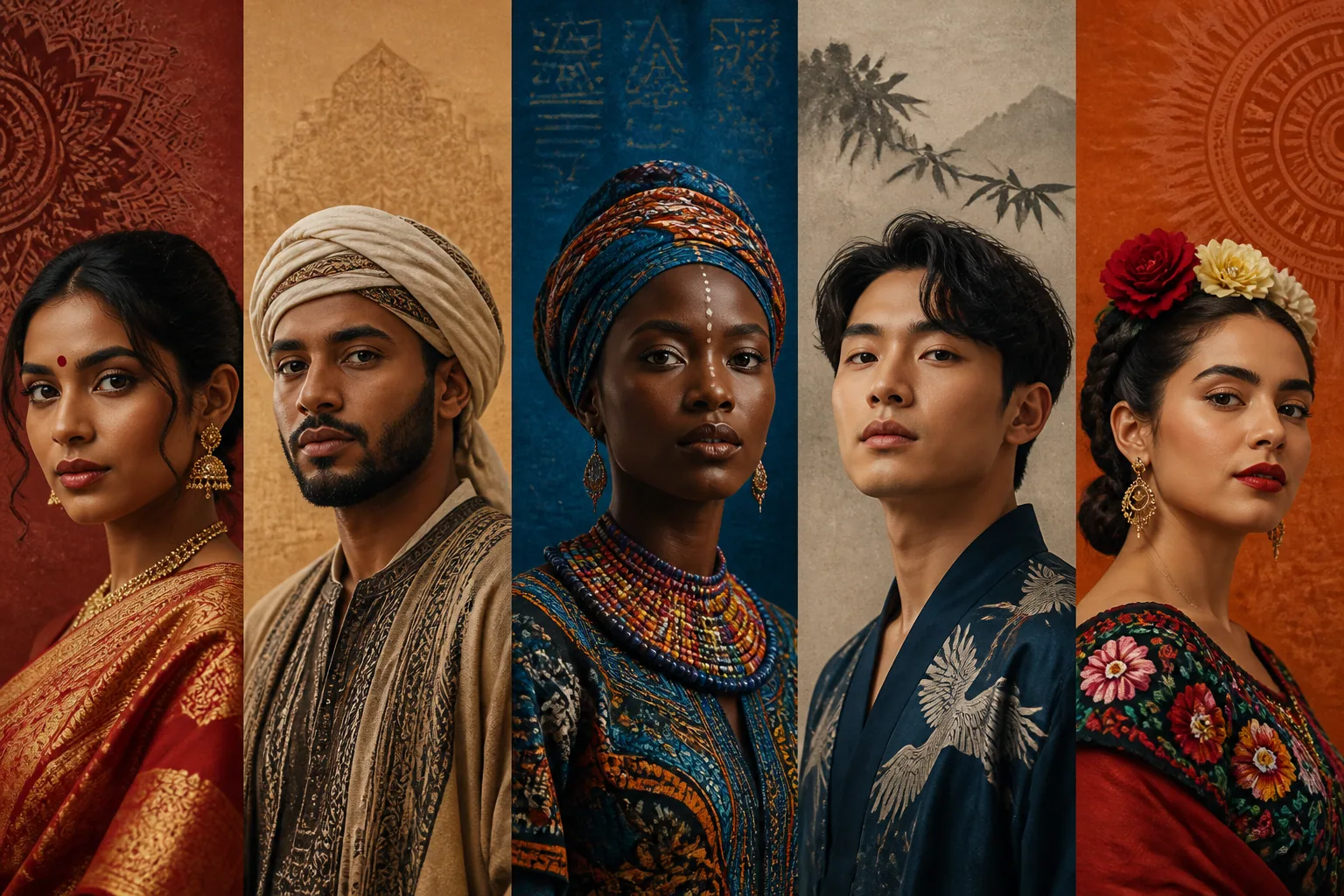
How to Choose the Right AI Portrait Style for Your Cultural Identity
AI portraits can be fun, polished, and creatively limitless, but when the goal is to reflect cultural identity, the choices you make matter a lot more. The right portrait style is not just about looking attractive or trendy. It is about recognizing the visual language of your heritage, the meanings carried by clothing, color, symbols, and setting, and the difference between genuine representation and a flattened stereotype. A thoughtful AI portrait can feel personal, rooted, and emotionally true. A careless one can miss the nuance completely.
This guide walks through how to choose a portrait style that feels like you, whether you want something traditional, contemporary, or hybrid. It also gives practical prompt advice, examples of identity-based transformations, and a checklist to help you avoid common mistakes while making space for your culture, your background, and your own style.
Why Cultural Identity Matters in AI Portraits
Cultural identity is not a costume. It is a mix of history, family memory, regional aesthetics, community values, migration stories, and personal expression. When you create an AI portrait that reflects cultural identity well, you are not only choosing an image style. You are making decisions about how you want to be seen, and how your heritage should be interpreted visually.
That matters because AI tools do not always default to accurate or inclusive representation. Research on AI-generated dermatologic images found that 89.8% of generated images depicted light skin, while only 10.2% showed darker skin tones, showing how quickly skin tone diversity can collapse without careful prompting and model guidance. The same study also found that prompt instructions aligned with real-world demographic distributions significantly improved diversity in the output: https://researchconnect.suny.edu/en/publications/ai-generated-dermatologic-images-show-deficient-skin-tone-diversi/
This is not only a skin tone issue. Broader research on text-to-image systems shows that AI can amplify geocultural, occupational, and adjectival stereotypes, but that more context-aware prompt refinement can reduce them substantially. One study reported reductions of 61% in geocultural stereotypes, 69% in occupational stereotypes, and 51% in adjectival stereotypes when prompts were improved with more context: https://link.springer.com/article/10.1007/s43681-026-01146-8
So if you want your portrait to feel authentic, the first step is understanding that accuracy and nuance do not happen automatically. You have to guide the model toward them.
Start with Research: Understanding the Visual Language of Your Heritage
Before you write a prompt, spend a little time looking at real visual references from your background. That can include family photos, traditional dress, regional architecture, textile patterns, ceremonial objects, hairstyles, jewelry, or paintings and photographs by artists from your community. This research helps you move beyond generic cues and into specific visual meaning.
For example, African textile traditions often carry symbolic layers that are easy for AI to miss unless you name them clearly. Kente cloth, for instance, is not just colorful fabric. Different colors and patterns can represent wealth, growth, peace, history, status, spiritual beliefs, and communal values. Source: https://www.afriklens.com/african-textile-art-how-traditional-fabrics-shapes-cultural-identity/
That kind of detail changes the portrait. Instead of saying “traditional African clothing,” you might specify the exact textile family, the color symbolism, and the occasion or mood you want to convey. The more grounded your reference, the less likely the final image will feel generic.
This same research-first approach applies to architecture and setting. Artist Linda Dounia Rebeiz noted that when she asked AI to generate images of Dakar, standard tools produced bleak, distorted depictions of low-rise buildings with dirt and peeling paint, which did not match the vibrant city she knew. Her experience is a useful reminder that AI often inherits outside assumptions about what a place should look like, rather than what it actually looks like. Source: https://qa.time.com/6309451/linda-dounia-rebeiz/
If your portrait is tied to a specific place, use local landmarks, street textures, interior details, climate cues, and neighborhood aesthetics as part of the prompt. A home setting, a market scene, a coastal background, or a modern city street can all say something different about identity.
Choosing Between Traditional, Contemporary, and Fusion Styles
One of the biggest creative decisions is whether you want a traditional, contemporary, or fusion portrait. There is no single correct answer. The right choice depends on what aspect of identity you want to emphasize.
A traditional style works well if you want to highlight heritage through clothing, symbols, rituals, or historical settings. This is often the best choice for portraits inspired by ceremonies, ancestral pride, or formal cultural presentation. The risk, however, is making the image feel museum-like or overly staged if it lacks personal detail.
A contemporary style focuses on how identity appears in modern life. This can include streetwear, current beauty trends, urban environments, minimal styling, or subtle references to heritage through jewelry, makeup, fabrics, or color choices. Contemporary portraits are useful if you want the image to reflect who you are today, not only where you come from.
A fusion style blends traditional and modern elements. This is often the most resonant option for diaspora communities or people whose identity has been shaped by both ancestral roots and present-day life. You might pair a modern silhouette with a traditional textile, or place a culturally symbolic accessory in an otherwise minimal editorial portrait. Fusion styles often create the most interesting and personal results because they show continuity rather than nostalgia alone.
If you are unsure, think in terms of message. Ask yourself whether the portrait should say “I honor my roots,” “I live this culture in the present,” or “my identity bridges both.” That answer will help you choose a style direction.
How to Use Color, Fabric, Symbols, and Backgrounds Thoughtfully
Color is one of the fastest ways to signal cultural meaning, but it should be chosen carefully. In many traditions, colors are not decorative only. They can suggest mourning, celebration, wisdom, protection, vitality, royalty, or spiritual power. If you do not know the cultural meaning of a color, it is worth checking before using it as the main visual cue.
Fabric matters just as much. The texture, drape, weave, and pattern of a garment can change the entire tone of a portrait. A richly patterned textile may communicate formality or celebration, while a clean monochrome outfit may create a more modern and understated identity statement. When possible, reference real textile types, regional garments, or specific material qualities rather than broad labels like “ethnic clothing.”
Symbols should be used with care. A symbol can add depth if it is meaningful to your actual background, but it can feel hollow or appropriative if it is borrowed only because it looks interesting. Make sure the symbol has a real connection to your story, family, or region. The best symbols often do quiet work. They do not need to dominate the image to be effective.
Backgrounds should support the identity you are trying to express, not compete with it. A natural landscape can communicate belonging to a region. A home interior can feel intimate and rooted in lived experience. A city setting can emphasize modern cultural life. Even the light in the scene matters. Soft warm light can suggest memory and tenderness, while bright direct light can feel editorial and contemporary.
Avoiding Stereotypes While Honoring Cultural Roots
The line between representation and stereotype is often about specificity. Stereotypes happen when a portrait reduces identity to a few predictable markers. Honoring roots means showing enough detail to feel real, but not so many clichés that the portrait becomes a caricature.
This is especially important because AI portrait systems often default to visual sameness for marginalized groups. The ViSAGe study, which analyzed 135 identity groups, found that AI-generated portraits frequently leaned toward stereotypical representations, and that historically marginalized groups often appeared visually less diverse even when prompts explicitly requested diversity. Source: https://research.google/pubs/visage-a-global-scale-analysis-of-visual-stereotypes-in-text-to-image-generation/
The practical fix is to avoid vague identity prompts. Instead of asking for “an African woman,” “an Asian man,” or “a Latin look,” describe the actual style language you want. Name the region, the garments, the setting, the hairstyle, the mood, and the era. Specificity is what keeps the model from falling back on shallow visual shorthand.
Research also shows that AI can reinforce gender norms in image generation. One auditing study found that DALL-E 2 underrepresented women in male-dominated occupations and overrepresented them in female-dominated ones, which is a reminder that cultural and social stereotypes often travel together in generative systems. Source: https://academic.oup.com/jcmc/article/29/1/zmad045/7596749
So if your portrait includes profession, status, or role-based cues, think carefully about whether the image is repeating a tired pattern or telling a more honest story.
Prompt Tips for Capturing Nuance and Authenticity
Prompt writing is where your research becomes visible. Good prompts do not just list aesthetic keywords. They create a layered description of identity, tone, and context.
Start with identity specifics. Mention the cultural background, region, or community if it matters to you. Then add clothing, hairstyle, setting, lighting, and artistic style. If you want a portrait that feels grounded, avoid overloaded prompts with too many unrelated visual ideas. A focused prompt often produces a more coherent result.
Skin tone deserves careful attention as well. Because AI systems can flatten diversity or skew toward lighter outputs, prompt more deliberately. Use phrasing that indicates your desired complexion range in natural language, and if the tool supports it, specify real-world tone variation instead of broad labels. The Fitzpatrick scale is commonly used in older systems, but research found that it is perceived as less inclusive than more granular scales like Fenty Beauty’s 40-point palette or the Monk 10-point scale, especially by BIPOC individuals and women. Source: https://research.google/pubs/which-skin-tone-measures-are-the-most-inclusive-an-investigation-of-skin-tone-measures-for-machine-learning/
That finding is useful because it reminds you that skin tone is not just a technical attribute. It is part of identity, and a coarse description may not capture how a person actually sees themselves.
Here are a few practical prompt principles to keep in mind: use specific nouns rather than vague adjectives, include the cultural context of garments or accessories, describe the emotional tone, and add environmental details that belong to the identity you want to express. If you want realism, ask for realistic proportions, natural skin texture, and true-to-life lighting. If you want an artistic interpretation, say so clearly so the result does not drift into an unintended stereotype.
A strong prompt might look like this in structure: identity background, clothing detail, symbolic color palette, meaningful accessories, setting, lighting, and visual style. This creates a fuller portrait language and helps the model understand what matters most.
Examples of AI Portrait Transformations Across Different Identities
Identity-based portrait transformations can be deeply powerful when they are built around real references rather than generic ethnic markers. For example, someone with West African heritage might choose a portrait centered on a tailored outfit in a specific textile tradition, paired with gold accents that reference status or celebration. Another person might prefer a modern city portrait with subtle textile details and jewelry that connect the present self to ancestral style.
A South Asian-inspired portrait could emphasize handwoven fabric, ornate embroidery, or a festive setting with colors chosen for cultural meaning. A Middle Eastern portrait might focus on a refined silhouette, regional patterns, architectural framing, or light that evokes interior courtyards and domestic elegance. An East Asian portrait may use minimalist composition, layered fabric textures, seasonal references, or styling rooted in contemporary fashion with historical echoes.
The important thing is not to force a single look onto everyone from a given background. Identity is not one image. It changes with age, location, family history, and personal taste. The strongest transformations feel like a portrait of a person, not a checklist of heritage markers.
Artists are already using AI this way to reclaim and reinterpret heritage. Nigerian-rooted artist Minne Atairu has used AI tools such as StyleGAN, Midjourney, and Blender to reimagine Yoruba iconography like Mami Wata and forms related to the Benin Bronzes, showing that AI can be a tool for restoring cultural memory rather than erasing it. Source: https://en.wikipedia.org/wiki/Minne_Atairu
That approach is inspiring because it treats AI as a medium for cultural authorship, not just entertainment.
How Diaspora Communities Can Express Belonging Through Visual Style
For diaspora communities, cultural identity is often layered. You may feel connected to ancestral traditions, but your everyday life may also reflect another country, another language, or a mix of both. AI portraits can capture that complexity beautifully if you let them.
A diaspora portrait does not need to look “pure” or historically fixed to be authentic. In fact, hybridity may be the most truthful choice. A modern jacket with traditional jewelry, a contemporary apartment with heritage textiles, or a runway-style portrait that references family history can all express belonging in a more honest way than a single-era costume ever could.
This is where fusion styling becomes especially valuable. It allows you to show that identity is living, not frozen. It can hold memory, adaptation, and aspiration at the same time. For many people, that is the most accurate visual expression of home.
If you are creating a diaspora portrait, think in terms of emotional truth. What parts of your background feel most present in your daily life? What objects, colors, or silhouettes remind you of family? What styling choices would a relative immediately recognize as “yours”? Those answers often produce better portraits than any generic list of cultural symbols.
Common Mistakes to Avoid When Creating Culture-Inspired AI Art
One common mistake is using overly broad identity labels. Broad labels give the model too much room to guess, and AI often guesses badly. The result can be vague or stereotyped imagery that misses the point entirely.
Another mistake is treating culture as a decorative theme. If the portrait uses meaningful symbols or garments only because they look exotic, the image can feel empty. Cultural elements should connect to a real story, place, or practice.
A third mistake is ignoring skin tone accuracy. Research has repeatedly shown that AI may default to lighter tones or reduce variation among marginalized identities, so it is important to check outputs critically and refine prompts when needed. Do not assume the first image is representative enough.
A fourth mistake is overloading the image with too many reference points. If you combine several unrelated traditions in one prompt, the model may produce a confusing collage rather than a coherent portrait. It is better to choose one strong cultural thread and develop it carefully.
Finally, avoid using AI as a replacement for listening to the people and communities being represented. If you are working outside your own background, research more deeply, use respectful reference material, and be transparent about what the image is and is not. The best AI portraits are shaped by humility as much as by style.
Final Checklist for Choosing a Portrait Style That Feels Like You
Before you generate the final image, run through a simple check. Does the style reflect a real part of your heritage, or just a visual trend? Have you chosen clothing, colors, and symbols with meaning? Does the skin tone, texture, and lighting feel believable and respectful? Does the background support the identity story instead of distracting from it? Does the portrait show your culture as lived, not stereotyped?
If the answer is yes, you are probably close. If not, refine the prompt and try again. AI portraits become much stronger when they are built with intention.
If you want to experiment with these ideas in a simple way, Selfie AI: AI Photo Generator can help you turn your selfies into custom portraits with different styles and scenarios, and its custom prompt feature makes it easier to test culture-inspired looks while keeping your own likeness at the center: https://findthe.app/selfie-ai-0xi7wd
The goal is not to make yourself look like a stereotype of your background. The goal is to create an image that feels like a thoughtful extension of who you are. When research, creativity, and cultural respect work together, AI portraits can become more than edits. They can become self-portraits with memory, meaning, and style.