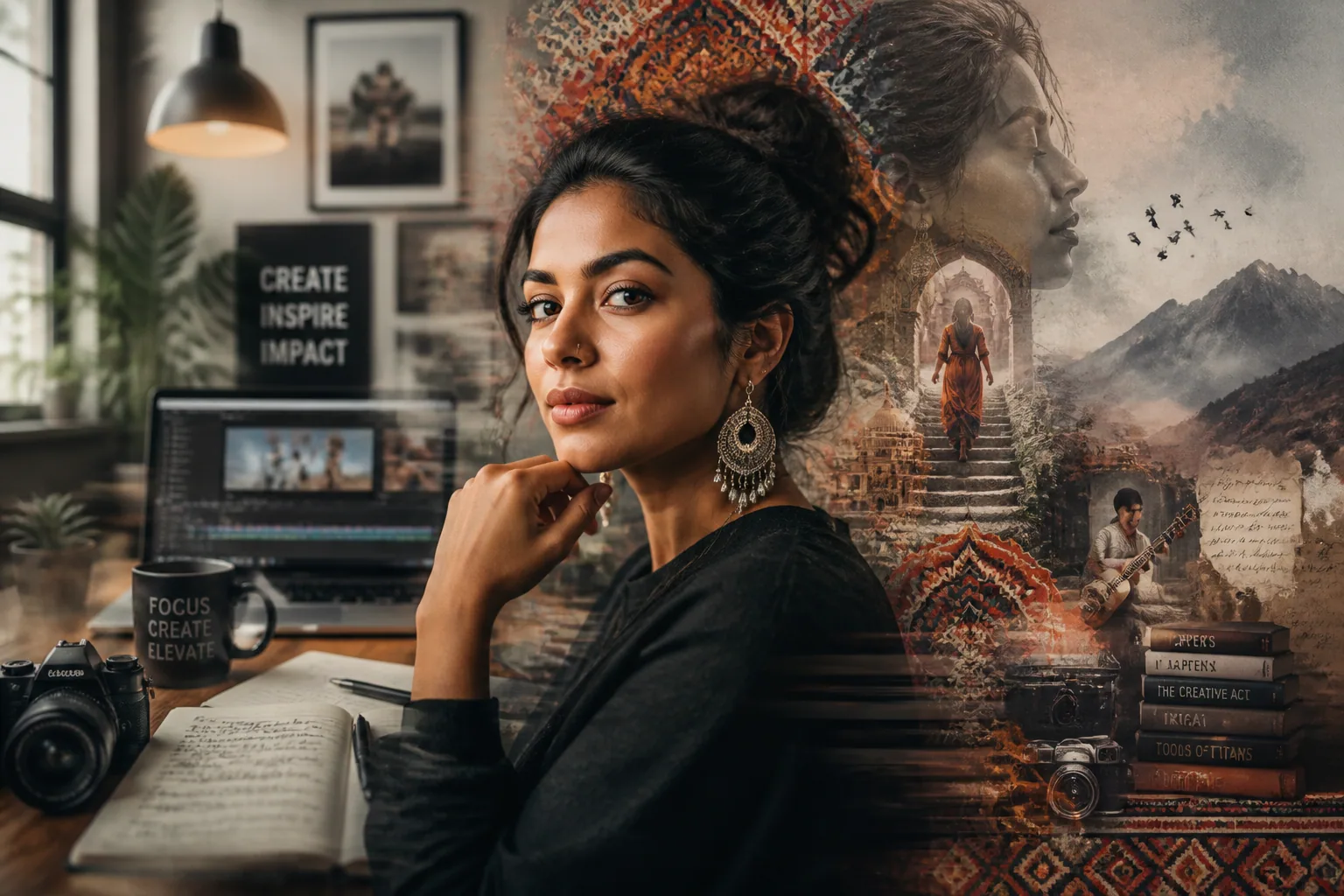
Elevating Identity: Using AI Portraits to Tell Your Personal Story
AI portraits are no longer just about making yourself look polished. In 2026, they are becoming a visual language for personal branding, where a single image can communicate heritage, ambition, taste, values, and creative direction at once. That shift matters because branding is getting more visual, more consistent, and more narrative-driven. Branding professionals increasingly expect visual identity to matter more this year, and consistent personal brands can boost engagement by 3.5 times while increasing brand recall by 65%. At the same time, 81% of people in a personal branding study said personal style is incredibly important to their brand, which makes the choices inside an AI portrait feel far more strategic than decorative.
The good news is that AI is already part of the modern portrait workflow. VSCO survey data reported that 83% of photographers in the U.S. and Canada use AI tools in some capacity, and 68% of working photographers use AI weekly or daily. Portrait work is one of the most common genres where AI is used, which suggests this is not a novelty trend but a new standard for visual storytelling. Source: https://petapixel.com/2026/04/09/nearly-90-of-surveyed-working-photographers-are-using-ai/
From Pretty Picture to Personal Narrative
The easiest mistake to make with AI portraits is treating them like upgraded headshots. A pretty picture can look impressive for a moment, but it rarely says anything memorable about who you are. A personal narrative portrait does more. It uses visual cues to hint at your background, your work, your obsessions, and the future you are building toward. That is why originality matters so much. A 2025 study of consumers in their 20s found that both realism and originality increased willingness to use AI-generated profile images, but originality was the stronger predictor. In other words, people do not just want portraits that look real. They want portraits that feel distinct. Source: https://www.kci.go.kr/kciportal/ci/sereArticleSearch/ciSereArtiView.kci?sereArticleSearchBean.artiId=ART003247206
This is where AI portraits become especially useful for founders, creators, consultants, and experts. You can decide what the image should communicate before you decide what it should look like. Should it say disciplined and premium, or imaginative and experimental? Should it reference your culture, your craft, your city, or your career path? Once you answer those questions, the portrait becomes a story-first asset instead of a generic profile image.
Choosing Props That Reflect Your Story, Work, and Values
Props are one of the simplest ways to add meaning without overcomplicating the image. When used intentionally, they can anchor the portrait in a specific identity or professional world. Adobe’s guidance on symbolic photography emphasizes that objects, color, themes, and settings can carry layered meaning, but they should be chosen thoughtfully because symbols can mean different things across cultures. Source: https://www.adobe.com/be_en/creativecloud/photography/discover/symbolic-photography.html
A prop should never feel random. It should support the story you want to tell. If you are a designer, that might mean sketchbooks, material samples, or a drafting tool. If you are a strategist, it might mean notebooks, charts, archival books, or a desk setup that suggests systems thinking. If you are a founder, a vintage microphone, prototype device, product box, or creative tool can suggest leadership and experimentation. The point is not to cram in every interest you have. It is to choose one or two objects that signal your role, your values, or your point of view.
This approach is especially important for personal branding because visual identity is not just about appearance, it is about recognition. A portrait with meaningful props can help people remember what you do and what you stand for. Focal Point Studio’s portrait guidance makes the same point: props work best when they enhance the story rather than distract from the subject. Source: https://www.focalpointstudio.net/blog/bp/how-to-use-props-to-enhance-portrait-photography
Using Environments and Backgrounds to Show Heritage and Ambition
The environment inside an AI portrait can reveal just as much as the person in the frame. A background can point backward to heritage or forward to ambition, or do both at once. A warm kitchen with textured light might suggest family roots, ritual, and memory. A studio with unfinished materials might suggest process and creativity. A skyline, control room, archive, workshop, or dreamlike digital landscape can imply the scale of your goals without saying a word.
For people building a personal brand, this is where AI portraits become especially powerful. You are not limited to a neutral backdrop or a studio look. You can frame yourself in a space that reflects where you come from or where you are going. A founder could be placed in a retro technology environment to suggest innovation with a nostalgic edge. A writer could be surrounded by layered notes and soft window light to express reflection and depth. A creator might stand in a surreal studio that feels part workspace, part imagination, signaling that their work bridges craft and concept.
The key is coherence. The setting should expand the identity in the portrait, not compete with it. If the environment is too crowded or too literal, the viewer stops reading the person and starts reading the scenery. A good portrait background feels like a clue, not a distraction.
How Color Palettes Can Communicate Identity and Emotion
Color is one of the fastest ways to shape emotional tone. It can make a portrait feel elegant, intimate, bold, grounded, futuristic, or playful before a viewer has processed any details. That is why color palettes are not only aesthetic choices, they are identity choices. In branding terms, they help create consistency. In storytelling terms, they help create mood.
A muted earth palette can communicate stability, heritage, and warmth. Deep navy and charcoal can suggest authority and professionalism. High-contrast neon tones can point to experimentation, nightlife, gaming, or digital creativity. Soft pastels can make a portrait feel lyrical or approachable. The best palette is the one that aligns with the story you want the portrait to tell and the audience you want it to reach.
The broader branding trend supports this level of intentionality. The 2026 Barómetro del Branding found that 93% of branding professionals expect branding to become more relevant in 2026, with visual identity systems gaining importance through motion, sensory dimensions, and consistency. Source: https://brandemia.org/barometro-del-branding-2026-tendencias
Blending Symbolic Imagery With Personal Style
The strongest AI portraits usually blend symbolism with style rather than relying on one or the other. Symbolic imagery gives the portrait meaning. Personal style gives it credibility. Together, they make the image feel authored rather than assembled.
For example, a creative professional might wear sharp tailoring but pair it with hand-drawn elements, analog tools, or a gallery-like environment. That combination suggests both refinement and artistic independence. A founder might use structured clothing, clean composition, and one symbolic object such as an old radio, retro keyboard, or prototype to suggest both discipline and imagination. A wellness creator might use soft natural fabrics, organic textures, and light-filled surroundings that signal calm and rootedness.
This is where the idea of originality becomes essential again. The 2025 consumer study on AI profile images found that originality outperformed realism as a predictor of willingness to use the image. That means a portrait does not need to be hyperliteral to be effective. It needs to feel like it belongs to you. Originality gives the portrait personality, and personal style keeps that personality believable.
Creative Portrait Concepts: Founder, Artist, Expert, and Creator Examples
It helps to think in archetypes when planning AI portraits, because each role calls for a different balance of symbolism, realism, and atmosphere. A founder portrait can focus on leadership and vision. Picture a person in a tailored jacket surrounded by retro hardware, notebooks, and warm studio light, implying invention and continuity. This works especially well when the goal is to signal authority with a creative edge.
An artist portrait can lean more dreamlike. Think textured backdrops, unusual lighting, partially abstract props, or a studio that feels halfway between physical and imagined. This kind of portrait benefits from stylization because the work itself is often about originality and expression. The aim is not perfect realism. The aim is emotional recognizability.
An expert portrait usually needs more realism because professionalism and trust matter more in this context. That aligns with the Frontiers in Psychology meta-analysis, which found that higher appearance realism improved perceptions of trustworthiness and attractiveness in contexts where professionalism or expertise are expected. Source: https://www.frontiersin.org/journals/psychology/articles/10.3389/fpsyg.2025.1624975/full
A creator portrait can sit somewhere in between. A creator may want to look polished but also imaginative, contemporary, and accessible. That could mean a vibrant palette, a layered workspace, or subtle motion cues that suggest ongoing process. The best creator portraits often feel like a behind-the-scenes snapshot of a world already in motion.
How Motion and Video AI Portraits Add Emotional Depth
Static portraits can say a lot, but motion adds presence. A blink, a head turn, a subtle smile, or a narrated sequence can turn an image into a lived moment. That is why video-based AI portraits are becoming more compelling for personal branding. They create emotional depth, and they can make the person in the image feel more immediate and memorable.
A Drexel University thesis from December 2025 found that AI-enhanced animated clips and narrated video formats increased emotional engagement and sense of presence compared to static and non-narrated formats. The research also noted that stronger emotional response did not always equal stronger perceptions of authenticity, which is an important reminder for branding. Source: https://researchdiscovery.drexel.edu/esploro/outputs/graduate/The-role-of-artificial-intelligence-in/991022148305004721
For personal brands, that means motion should be used with intention. It works best when it adds atmosphere, confidence, or narrative progression. A founder walking through a studio, a creator turning toward the camera, or an expert speaking in a cinematic animated portrait can all create a stronger sense of presence. The goal is not to over-animate. It is to make the portrait feel inhabited.
Avoiding Clutter: How to Keep Symbolism Clear and Intentional
The more meaning you try to pack into a portrait, the easier it is to lose the message. Clutter is one of the fastest ways to make an AI portrait feel generic or confusing. If every object is symbolic, nothing feels important. If the palette is loud, the background busy, and the styling overworked, the portrait stops telling a story and starts shouting for attention.
The solution is hierarchy. Choose one primary idea and support it with one or two secondary cues. For example, if the story is about heritage and ambition, the heritage cue might be a textile, color, or environment, while the ambition cue might be a modern garment or a futuristic setting. If the story is about expertise and creativity, the expertise cue might come from posture and styling, while the creativity cue comes from a single unexpected object or a softly surreal background.
This is also where restraint helps authenticity. People are more likely to trust a portrait that feels composed than one that feels overloaded. Visual clarity makes the image easier to read and easier to remember.
Prompting Tips for More Authentic, Story-Driven AI Portraits
Good prompting starts with identity, not aesthetics. Instead of asking for a beautiful portrait, start by describing who the image is for and what it should communicate. Define the role, mood, setting, wardrobe, objects, and color palette before you worry about lighting details. That way, the model has a narrative framework to follow.
Useful prompt thinking includes questions like: What does this person care about? What culture or environment shaped them? What future are they building? What should the viewer feel in the first three seconds? If you can answer those questions clearly, your prompt will naturally become more specific and more personal.
One practical approach is to write the prompt in layers. Start with the subject identity, then add the symbolic elements, then define the visual style. For example: a founder in a tailored jacket, surrounded by retro technology, warm cinematic lighting, confident expression, editorial composition, subtle grain, brand-forward portrait. This structure helps the AI preserve the story while still leaving room for visual interpretation.
Common Mistakes That Make AI Portraits Feel Generic
The most common mistake is choosing style before story. If you begin with trendy visual effects and end with an undefined subject, the result may look impressive but feel empty. Another common problem is overusing symbolism. A portrait with too many props, too many references, or too many visual tricks can become difficult to interpret.
A second mistake is copying other people’s aesthetics too closely. Trends are useful for inspiration, but if your portrait looks like everyone else’s, it defeats the purpose of personal branding. Remember that originality is part of what makes AI imagery compelling in the first place. The research on AI profile images suggests that uniqueness matters more than literal realism for many users, especially when the image is meant to represent identity rather than documentation.
Finally, avoid inconsistent tone. If the wardrobe says executive, the background says fantasy, and the color palette says luxury streetwear, the portrait may feel confused unless those elements are intentionally connected. A great portrait has one clear emotional center.
Turning Your AI Portrait Into a Consistent Brand Asset
The best AI portraits are not one-off experiments. They become part of a visual system. That means you can build several portraits around the same core identity, changing only the setting, props, or mood for different uses. One version might be formal and professional for a website bio. Another might be more creative for social content. A third might be animated for launches, speaking events, or campaign visuals.
This is where consistency matters most. Repeating key visual cues, such as a color palette, silhouette, lighting style, or symbolic prop, helps people recognize you faster. It also reinforces trust and recall, which is exactly why consistent personal brands outperform inconsistent ones. When your portraits share a common identity, they become a system rather than isolated images.
If you want a simple way to experiment with that system, Selfie AI: AI Photo Generator can help you create portraits and animated videos in a wide range of styles and scenarios, including custom prompts for more personal concepts. You can explore it here: https://findthe.app/selfie-ai-0xi7wd
Ultimately, the most memorable AI portraits do more than flatter the face. They communicate a point of view. They show where you come from, what you value, and what kind of future you want to build. When the styling, setting, color, and motion all serve that story, the portrait becomes more than an image. It becomes part of your brand identity.