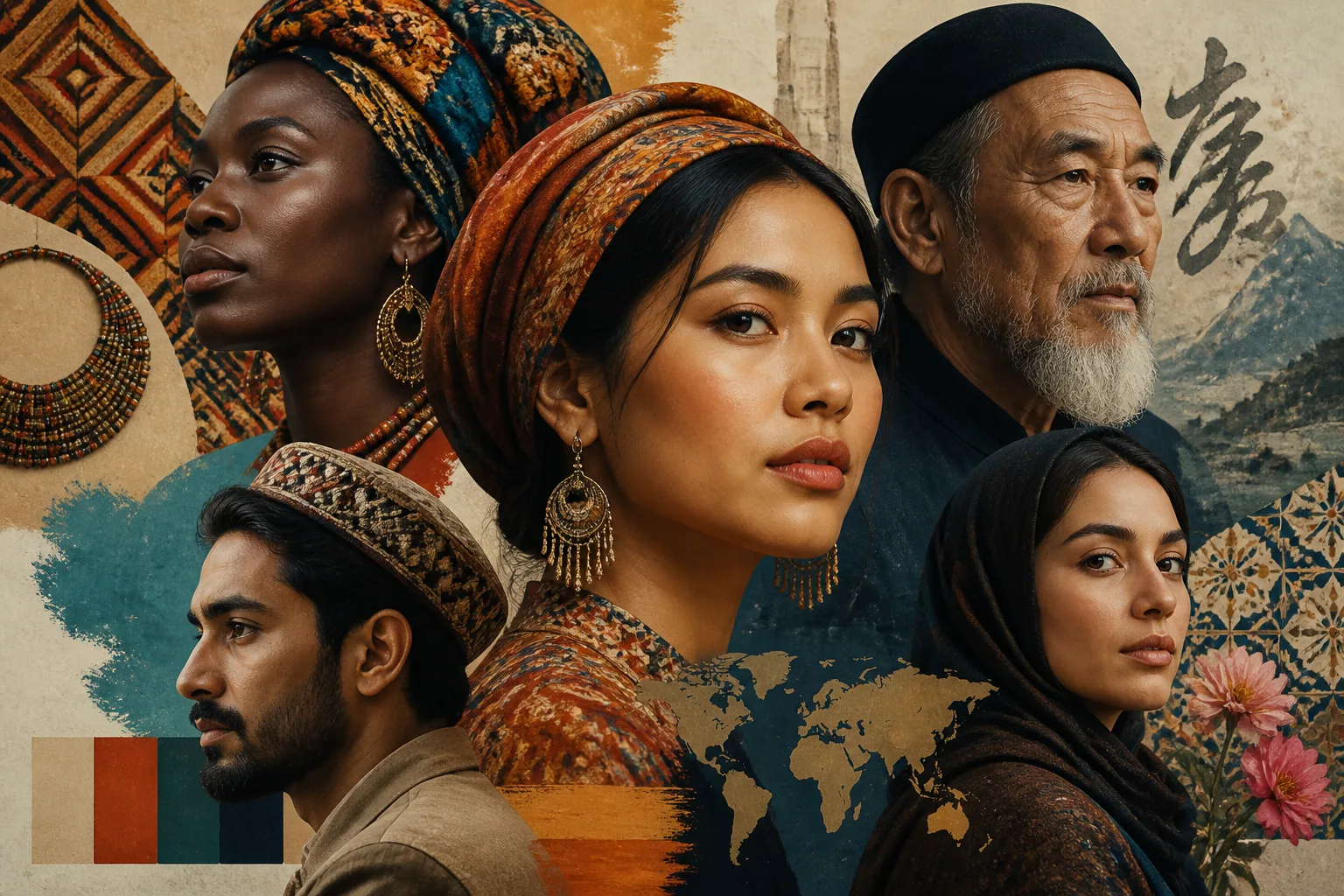
How AI Portraits Can Reflect Cultural Symbols Respectfully in a Global Selfie Era
AI portraits can be playful, expressive, and deeply personal. They can also be surprisingly powerful when they reflect heritage, identity, and visual traditions with care. In a global selfie era, where anyone can turn a simple photo into a stylized portrait, the challenge is no longer just making an image look beautiful. It is making sure the symbols, colors, garments, and motifs inside that image still mean something. When AI treats culture as decoration only, the result can feel flat, stereotyped, or even disrespectful. But when you approach it with intention, research, and a sense of context, AI portraits can become a thoughtful extension of self-expression.
That is especially important because generative models do not always handle cultural specificity well. Research on algorithmic portraiture has shown that AI can erase or distort culturally important symbols, including a case study where outputs omitted or misrepresented over 80% of East Asian ceremonial symbols compared with portraiture norms. Brookings has also noted that image generators often default to young, white, male figures in Western business attire, which reveals how easily AI mirrors dominant visual assumptions rather than the full diversity of human identity. In other words, if you want an AI portrait that feels culturally grounded, you usually have to guide the model with much more care than a generic prompt would require.
Why Cultural Symbolism Matters in AI Portraits
Cultural symbols are not just visual accessories. They often carry history, ancestry, spirituality, status, gender roles, or community belonging. A textile pattern can identify a region. A headwrap can signal occasion, age, or dignity. A color may communicate mourning in one place and celebration in another. When AI turns these elements into generic aesthetic props, it strips away the context that gives them meaning.
This matters even more in portraits because faces already communicate identity. If the surrounding visual language is also symbolic, the whole image becomes a statement about who the subject is and where they come from. A portrait with meaningful cultural cues can feel rooted and believable. A portrait with random or mismatched cues can feel like a costume collage. The difference is not simply style. It is respect.
Recent studies reinforce this point. A 2025 comparison of AI-generated images and ethnographic visual records from Northern Portugal and Galicia found that AI often failed to depict authentic costumes, masks, and dance motions, producing generic images instead of accurate representations. Similarly, a cross-platform analysis of Indian cultural motifs found that models exaggerated festival colors and repeated stereotypical symbols, creating depictions that felt alienated from the communities they were supposedly referencing. These patterns show that cultural symbolism is one of the first things AI tends to flatten unless the prompt and reference process are carefully shaped.
The Difference Between Representation, Inspiration, and Appropriation
It helps to separate three ideas that are often mixed together: representation, inspiration, and appropriation. Representation is when an image aims to reflect a culture, identity, or tradition in a way that is accurate, context-aware, and rooted in genuine understanding. Inspiration is more interpretive. It borrows visual ideas, atmospheres, or motifs while acknowledging that the result is creative rather than documentary. Appropriation happens when symbols, garments, or sacred aesthetics are used without permission, understanding, or respect for their meaning.
For AI portraits, the line between inspiration and appropriation often depends on context. Wearing or simulating a culturally significant garment without knowing its role can feel exploitative. Encyclopedic definitions of cultural appropriation often point to examples like war bonnets, tribal tattoos, or sacred symbols used outside their original setting. The issue is not that visual borrowing is always forbidden. The issue is that some visual elements are not just “cool details.” They are living markers of identity and belonging.
A respectful AI portrait should ask: am I representing my own heritage, honoring a culture I have studied deeply, or just borrowing something because it looks striking? That question alone can prevent a lot of careless prompt writing. It can also help you decide whether you need more research, more specificity, or a different visual direction altogether.
How Symbols, Garments, and Patterns Carry Meaning
Garments and patterns are often among the most misunderstood parts of cultural imagery because they look decorative first. In reality, they are frequently symbolic systems. The Mola textiles made by Guna women in Panamá, for example, are not merely ornamental. Through applique, embroidery, and layered fabric, they function as cultural markers with meaning tied to identity and community practice. Likewise, Yoruba textile traditions such as Aso Olona connect geometric patterns, fabrics, and head-ties to cultural status, gender identity, and social belonging.
That means a prompt like “woman in African clothing” or “man in Asian robe” is usually too vague to produce a meaningful image. It encourages the model to reach for generic costume language. A stronger approach names region, textile tradition, occasion, and the emotional tone you want the portrait to carry. Even then, you should only use specific garments if you understand what they represent. Otherwise, the portrait may look visually rich while still being culturally empty.
The same applies to accessories, jewelry, hairstyles, masks, veils, and ceremonial details. These elements can be beautiful, but they are rarely neutral. They can signify marital status, spiritual role, regional identity, or a rite of passage. AI often places these details as if they were interchangeable fashion props. Your job, as the prompt author, is to restore specificity and purpose.
What Colors Mean Across Different Cultures
Color is one of the easiest ways to add mood to an AI portrait, but it is also one of the easiest ways to send the wrong message. A 2025 systematic review across 64 countries found that some color-emotion links appear more universal, such as blue and green in certain contexts, but colors like red and white vary sharply depending on geography, religion, and history. This is why color palettes should never be chosen only for aesthetics when cultural symbolism matters.
White is a classic example. In many Western wedding contexts, white suggests purity, elegance, or celebration. In several East Asian societies, however, white is closely associated with mourning and funerary tradition. So if you use a heavy white palette for a congratulatory portrait meant to evoke joy, you may accidentally create a tone of grief or solemnity. The image may still be beautiful, but it may not communicate what you intended.
Green offers another interesting example. In many Islamic contexts, green is sacred and can signify paradise, renewal, and spiritual blessing. In other cultural settings, though, green may have different or even negative associations. Some Chinese idioms and social meanings can frame green in ways that are not universally positive. Red, too, can shift from luck and celebration to danger, sacrifice, or warning depending on the context. The safest approach is not to assume color is universal. It is to research the region, tradition, or community you are referencing and then build the palette with awareness.
If you are creating a culturally inspired portrait for yourself, ask what you want the colors to say. Do you want reverence, festivity, ancestry, power, renewal, or intimacy? Once you know the emotional purpose, you can choose colors that support that message instead of relying on generic “ethnic” or “bold” visual language.
Balancing Authentic Heritage With Creative Fantasy
One of the most exciting things about AI portraits is that they can blend realism with imagination. You can create a version of yourself that feels ceremonial, futuristic, royal, or mythic. The key is to separate authentic anchors from creative additions. Authentic anchors are the elements that should remain culturally grounded, such as a specific textile pattern, a recognized silhouette, or a meaningful color palette. Creative additions are the areas where you can experiment, such as lighting, background, pose, or subtle fantasy effects.
A useful rule is this: the more culturally significant an element is, the less you should improvise it. If a garment has ceremonial meaning, keep its structure accurate. If a motif is sacred or region-specific, use it carefully and only after understanding its context. Then layer fantasy around the edges rather than inside the core symbols. That way, the portrait can feel imaginative without becoming disrespectful.
This balance also helps diaspora users who want portraits that express dual belonging. You might combine a heritage-inspired textile with a modern silhouette, or place a culturally meaningful color palette inside a contemporary editorial look. Done well, this can communicate both continuity and reinvention. It says, “I come from here, and I also live in the present.”
How to Research Visual References Respectfully
Respectful research starts with specificity. Instead of searching broadly for “traditional dress” or “tribal portrait,” look for the actual region, community, textile, festival, or historical period you want to reference. Seek out museum collections, cultural heritage institutions, academic articles, local artists, and community-led sources. The Cleveland Museum of Art’s discussion of Mola textiles is a strong example of the kind of context that helps you understand what an item means, not just what it looks like.
When possible, use sources that explain usage, symbolism, and social context. Ask who wears the item, when it is worn, whether it is ceremonial or everyday, and whether there are elements that should not be reproduced casually. This is especially important for sacred attire, ritual markings, or styles tied to specific ceremonies. If the reference is community-specific, the most respectful move is often to learn from community members or creators rather than only from image search results.
Better prompt engineering also helps. Research suggests that including context, specifying region or era, and reducing vague modifiers improves model fidelity and lowers the risk of stereotypes. In practice, that means writing prompts with concrete reference points rather than abstract adjectives. “Young woman in a crimson silk hanbok-inspired silhouette with restrained floral embroidery, studio lighting, calm expression” will usually guide the model more responsibly than “beautiful exotic Asian princess.”
Common Mistakes That Turn Meaning Into Cliché
The most common mistake is overgeneralization. When prompts say things like “ethnic,” “tribal,” “oriental,” or “exotic,” they flatten very different cultures into a single aesthetic bucket. These words do not create authenticity. They create sameness. They also encourage the model to generate stock imagery rather than specific cultural signals.
Another mistake is stacking too many symbols from unrelated traditions. A portrait that combines a kimono, Maasai beadwork, a feathered headdress, and a Hindu temple backdrop may seem globally rich, but it is often just visual confusion. It may read as appreciation to the person prompting it, yet it can look careless or appropriative to anyone who recognizes the mismatch.
A third mistake is exaggeration. AI models are especially prone to turning cultural references into theatrical spectacle, which can be seen in the research on Indian cultural motifs where festival colors and symbolic elements were overstated. If your portrait looks like a tourist advertisement or fantasy costume catalog, it may have lost the subtlety that makes culture feel lived-in. Often, the most respectful portraits are not the loudest. They are the ones that get the small details right.
Examples of AI Prompts That Work Well vs Poorly
Weak prompt: “Create an exotic woman in traditional clothes with beautiful cultural accessories.” This is vague, generic, and loaded with words that collapse culture into a decorative mood. It gives the model no region, no context, and no reason to be accurate.
Stronger prompt: “Create a studio portrait of a young woman inspired by Yoruba cultural aesthetics, wearing a Gele head-tie and an elegant patterned outfit with geometric textile influence, warm skin tones, dignified posture, soft natural lighting, and a respectful editorial mood.” This prompt is still creative, but it names the tradition, identifies the garment language, and sets a tone that supports dignity rather than caricature.
Weak prompt: “Man in spiritual robes, colorful, mystical, ancient, global.” This one is too broad and mixes vague spirituality with fantasy language. The result is likely to be a generic robe that resembles nothing specific.
Stronger prompt: “Portrait of a man inspired by North African desert aesthetics, wearing a naturally draped indigo garment, subtle embroidered details, earth-toned background, calm expression, and restrained symbolic ornamentation, avoiding costume exaggeration.” This version gives the model enough direction to produce coherence without inventing random cultural markers.
When writing prompts, a good test is whether someone from that culture could identify what you are trying to reference. If the answer is no, the prompt may be too broad. If the answer is yes but the image feels respectful, you are closer to the right balance.
Questions to Ask Before Generating a Culturally Inspired Portrait
Before you hit generate, pause and ask a few honest questions. Am I referencing my own heritage, or someone else’s? Do I understand the meaning of the garment, symbol, or color I am using? Am I describing a real tradition, or just chasing a visual trend? Could this image accidentally disrespect a sacred or ceremonial element?
It also helps to ask whether the portrait relies on stereotypes to feel “recognizable.” If the answer is yes, the concept probably needs more research. Another useful question is whether the final image would still feel meaningful if the most obvious cultural symbols were removed. If it would not, then the portrait may be depending too heavily on surface-level markers instead of deeper visual coherence.
For diaspora creators, a final question can be especially important: does this image express connection, or does it try too hard to prove identity? Sometimes the most powerful portraits are quiet. A single textile reference, a meaningful color, or a hairstyle rooted in family memory can communicate more than a crowded collage of symbols ever could.
A Practical Framework for More Respectful AI Self-Expression
A simple framework can help you create portraits that feel thoughtful instead of random. Start with meaning. Decide what the portrait is meant to say about identity, memory, pride, or imagination. Next, choose anchors. Pick one or two culturally specific elements that you understand well enough to use accurately. Then define the context. Name the region, era, occasion, or aesthetic environment so the model has boundaries. After that, build the mood with lighting, background, pose, and composition. These are excellent places to be creative without tampering with core symbolism.
If you want to explore different visual directions while still staying grounded, a tool like Selfie AI: AI Photo Generator can be useful because it lets you create personalized portraits and custom prompts while working from your own selfies. That makes it easier to experiment with heritage-inspired looks, editorial styling, or fantasy settings while keeping your own likeness at the center of the image: https://findthe.app/selfie-ai-0xi7wd
The last step is review. Look at the image and ask whether the symbols, garments, and colors still make sense together. Check for overstatement, mismatched traditions, or details that feel like costume rather than culture. If something feels off, adjust the prompt and try again. Respectful AI portraiture is rarely a one-click process. It is usually a process of noticing, refining, and caring enough to get the details right.
In the end, the most compelling AI portraits are not the ones that use the most symbols. They are the ones that use symbols well. When you combine research, cultural sensitivity, and creative intention, AI can become a tool for self-expression that feels more personal, more nuanced, and more globally aware.