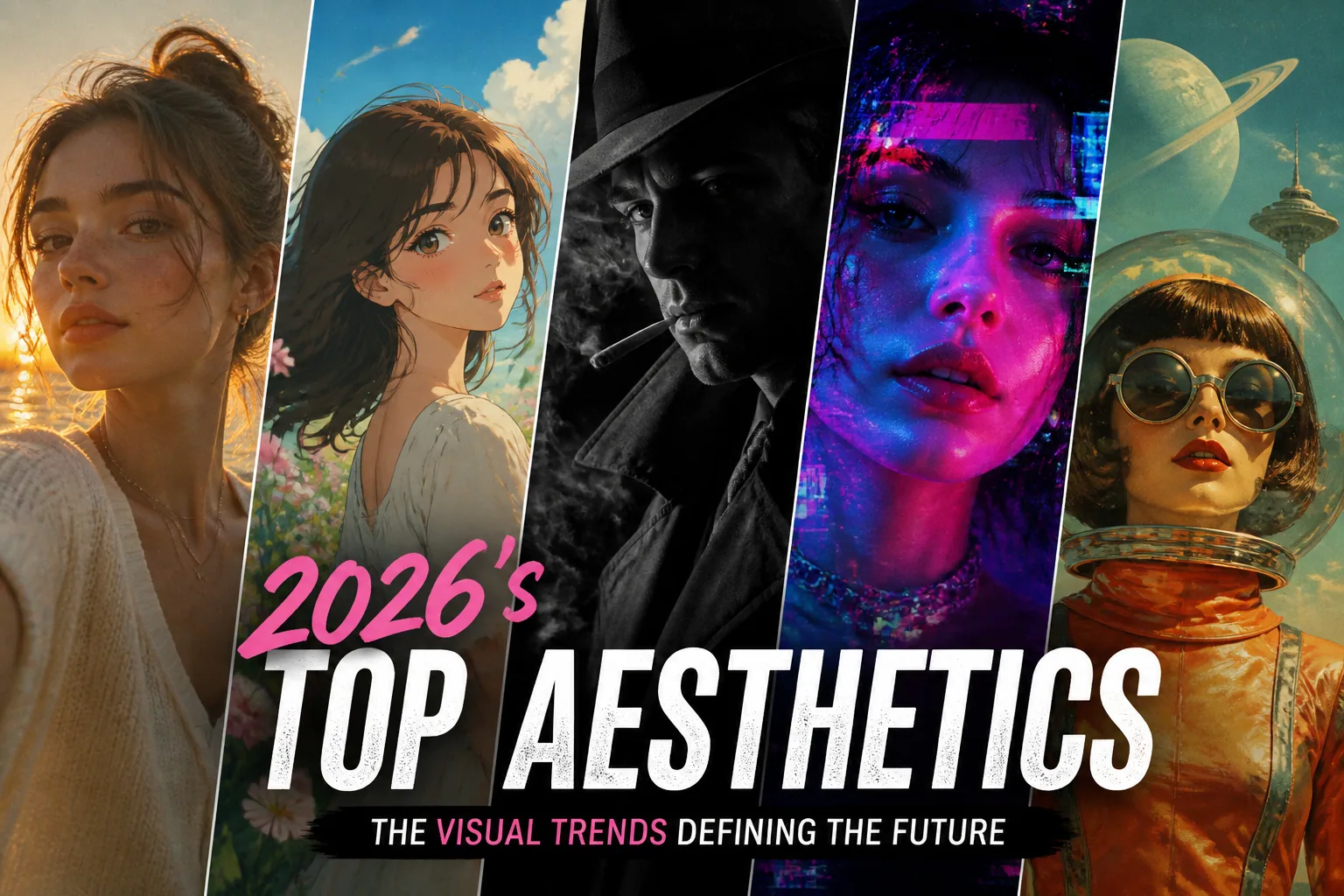
From Golden Hour to Glitchcore: Your Guide to 2026’s AI Aesthetic Trends
AI portrait and animation trends in 2026 are not just about looking polished anymore. The biggest visual wins now come from images that feel personal, tactile, and a little bit human. Creators, influencers, and everyday users are moving toward aesthetics that suggest a real moment, a real mood, or a real point of view, even when the image itself is AI-generated.
That shift matters because social feeds have changed. People scroll past perfection, but they pause for texture, emotion, and something that feels specific. In 2026, the winning looks are often the ones that borrow from natural light, retro film, dreamy animation, moody cinema, digital distortion, and surreal micro-worlds. Used well, these trends can make your selfies feel more memorable, more shareable, and more aligned with your personal brand.
Why AI Aesthetics Matter More Than Ever in 2026
AI aesthetics matter because visual identity is now part of discovery. Your profile picture, story post, carousel, and short-form video thumbnail all signal who you are before anyone reads a caption. If your visuals feel current, intentional, and emotionally resonant, people are more likely to stop, click, save, and share.
Research points to a strong shift toward storytelling-driven visuals. AI-generated art focused on personal storytelling, including visual diaries, before-and-after transitions, and identity explorations, is seeing 3 to 4 times more engagement than standalone images and is twice as likely to be bookmarked for later, according to https://www.psartworks.in/2026/01/ai-art-trends-2026-complete-guide.html.
That makes 2026 less about producing the flashiest image and more about producing the most meaningful one. A single selfie can become a mini narrative if it reflects a mood, a setting, or a style that feels recognizably yours.
The Big Shift: From Airbrushed Perfection to Authentic Visual Storytelling
The old formula was simple: smooth skin, sharp features, perfect symmetry, and very little visible texture. In 2026, that formula looks dated. Heavy retouching is increasingly seen as a red flag, especially in professional branding where trust matters. Natural, relaxed posing and authentic facial expression are replacing stiff corporate headshots, and overly polished edits can now feel less credible rather than more impressive, according to https://www.aiheadshots.ai/blog/headshot-trends-2026.
This is part of a larger aesthetic correction. Designers and image-makers are leaning into warmth, tactile surfaces, and visible imperfections. Ink textures, hand-drawn strokes, fabric details, analogue materials, grain, blur, and asymmetry are all back in style, as noted by Creative Bloq at https://www.creativebloq.com/design/texture-warmth-and-tactile-rebellion-the-big-graphic-design-trends-for-2026.
In practice, this means the best AI portraits in 2026 often look slightly less manufactured. A relaxed posture, a candid glance away from the camera, a soft shadow across the face, or a visible film-like texture can make an image feel more believable and therefore more engaging.
Golden Hour Realness: Natural Light, Texture, and Imperfect Poses
Golden hour remains one of the easiest and most effective aesthetic directions because it naturally flatters skin tones, softens edges, and adds emotional warmth. But in 2026, golden hour is less about the classic influencer glow and more about realism. Think sun-kissed but not overexposed, textured but not gritty, relaxed but not staged.
The key is imperfect posing. Instead of a locked-in smile and centered composition, try slight head turns, shoulders angled away from the lens, hands in frame, or motion blur that suggests you were caught mid-moment. These details keep the image from feeling like a catalog mockup.
To prompt this look, ask for natural late-afternoon sunlight, soft shadows, candid expression, visible skin texture, and gentle depth of field. If your AI tool allows it, add cues like subtle lens flare, warm highlights, and an editorial but unposed feel. The goal is to suggest a real memory, not a studio setup pretending to be one.
Studio Ghibli Softness and the Rise of Gentle, Dreamlike Portraits
Few trends have moved faster than Studio Ghibli-inspired imagery. In early 2026, Imagera.ai reported that 130 million users generated more than 700 million Ghibli-style images in a single week, showing just how powerful this soft, whimsical look has become. Source: https://imagera.ai/blog/studio-ghibli-ai-art-generator-2026
Why does it work so well? Because the Ghibli-inspired aesthetic combines innocence, nostalgia, and atmosphere. It often uses soft gradients, delicate expressions, painterly backgrounds, and a sense of quiet wonder. Even when applied to a selfie, it can make the subject feel like part of a story rather than just a person in a frame.
To recreate this style without making it look generic, focus on emotional cues rather than just visual keywords. Prompt for gentle lighting, hand-painted softness, muted but warm colors, expressive eyes, and a serene, cinematic environment. If you add too many obvious references, the result can feel derivative. The better approach is to capture the feeling of calm, wonder, and intimate storytelling.
Retro Revival: How ’70s, ’80s, and ’90s Visual Nostalgia Took Over
Retro aesthetics are back because nostalgia offers a break from hyper-clean digital sameness. From the ’70s to the ’90s, creators are borrowing film filters, lo-fi color grading, neon lighting, VHS-style softness, and analogue textures to make images feel familiar and emotionally warm. LTX Studio notes that nostalgia is acting as a counterbalance to digital perfection, helping visuals feel more human and less sterile, at https://www.ltx.studio/blog/ai-image-trends.
Each decade brings a different mood. The ’70s lean toward warm film stock, earthy tones, and sun-faded grain. The ’80s add glossy contrast, bright color, and a bolder pop sensibility. The ’90s often bring flash photography, early digital weirdness, camcorder energy, and a slightly nostalgic rawness.
If you want this style to land, be specific. Ask for Kodak-inspired warmth, disposable camera grain, retro fashion details, or early internet color palettes. The more precise the visual era, the more convincing the AI result tends to be. Retro works best when it feels curated, not random.
Dark Cinematic Noir: Moody Lighting, Drama, and High-Impact Portraits
For creators who want more edge, cinematic noir is one of the strongest directions in 2026. It trades softness for contrast, using deep shadows, dramatic side lighting, muted palettes, and high emotional intensity. This style is especially effective for portraits that need authority, mystery, or visual tension.
Noir works because it instantly creates a story. A face half-lit by a window, a dark background, and a sharply defined silhouette can suggest introspection, ambition, secrecy, or power. In a crowded feed, that kind of mood can stop the scroll very quickly.
When prompting noir, be careful not to make it overly theatrical. Instead of asking for just “dark cinematic portrait,” specify low-key lighting, rain-speckled atmosphere, desaturated tones, reflective surfaces, or a moody editorial composition. The best results usually balance polish with restraint.
Glitchcore Goes Mainstream: Why Digital Imperfections Feel Fresh
Glitchcore has moved from niche internet art into the mainstream because digital failure now feels stylistically intentional. Distortion, pixelation, compression artifacts, scan lines, and color channel shifts can make an image feel alive, unpredictable, and distinctly digital. Unite AI identifies glitchcore as part of the larger embrace of imperfection in 2026, where flaws become features rather than mistakes, at https://www.unite.ai/ai-art-trends-to-watch-in-2026/.
This trend works especially well for creators who want to signal tech-savviness, futurism, or playful rebellion. A clean portrait can feel safe; a portrait with controlled glitch effects feels current and concept-driven. The trick is moderation. Too much distortion and the image becomes unreadable. Just enough and it feels fresh.
If you are prompting glitchcore, try describing partial corruption, digital tearing, chromatic aberration, broken pixels, and deliberate transmission errors. Pair those effects with strong composition so the face or subject still remains the anchor point. The image should look like a stylish interruption, not a rendering mistake.
Surreal and Nano-Absurdist Styles: The Internet’s New Favorite Weirdness
Surrealism is thriving again, but the 2026 version is faster, smaller, and more absurd. Floating objects, melted forms, impossible scale shifts, and playful violations of physics are all becoming recognizable visual languages. Creativepool describes this rise as part of an “eclectic-centric creativity” trend, where dreamlike distortions and bizarre compositions grab attention fast, at https://creativepool.com/magazine/features/top-10-design-trends-2026.34185.
Nano-absurdist visuals are a particularly viral branch of this trend. These are micro-scenes, tiny worlds, and uncanny juxtapositions where everyday objects appear in strange contexts. Tom’s Guide has highlighted the popularity of miniature, surreal prompt ideas that place ordinary subjects into bizarre settings, showing how quickly these concepts can spread online, at https://www.tomsguide.com/ai/forget-flowers-5-viral-nano-banana-trends-reshaping-valentines-day.
The appeal is easy to understand. Surreal images are inherently conversation starters. They make people pause, ask what they are seeing, and often share the image because it feels unexpected. If your goal is virality or pure novelty, this is one of the strongest directions to explore.
How to Prompt AI for Each Aesthetic Without Getting Generic Results
The difference between a trendy image and a generic one usually comes down to prompt quality. Most tools can generate something recognizably stylish, but the best results come from layering specifics: mood, light, texture, pose, palette, and story. The more clearly you define the emotional intent, the better the output tends to be.
For golden hour, describe warm natural light, candid posture, and soft skin texture. For Ghibli-inspired portraits, emphasize dreamy calm, painterly softness, and emotional warmth. For retro looks, specify the decade, film texture, and the exact kind of nostalgia you want. For noir, define the lighting and atmosphere. For glitchcore, identify the digital failure mode. For surreal and nano-absurdist images, describe the impossible scale shift or strange object pairing.
If you want to experiment with AI portraits and animations across multiple styles quickly, a tool like Selfie AI: AI Photo Generator can be useful. It lets you upload a few selfies to create a personalized AI model, then transform those photos into different scenes, animated videos, and custom prompt-driven concepts with your own likeness. You can find it here: https://findthe.app/selfie-ai-0xi7wd
Lighting, Color Grading, and Composition Tips That Make Trends Work
Lighting is usually the first thing that sells an aesthetic. Soft front light creates openness, side lighting adds drama, backlight creates romance, and mixed colored light can push an image into retro or futuristic territory. If the lighting is wrong, even a strong prompt can feel flat.
Color grading comes next. Warm highlights and muted shadows often support golden hour and retro aesthetics. Low saturation and deep contrast suit noir. Bright neon accents can push glitchcore or ’80s revival. Pastels and softened contrast help with Ghibli-like portraits. For surreal looks, color can either anchor the absurdity or heighten it further, depending on how far you want to go.
Composition is just as important. Centered compositions can feel formal, while off-center framing often feels more natural and contemporary. Close crops create intimacy, while wider frames let you build a story around the subject. In 2026, the most successful AI visuals often look like they were composed with intent, not just generated to fill a square.
Hybrid Aesthetics: How to Mix Styles Without Making Your Selfies Look Gimmicky
Mixing aesthetics can be powerful, but only if the blend feels coherent. A good hybrid usually combines one dominant style with one supporting layer. For example, you might pair golden hour realism with subtle film grain, or noir lighting with a retro color palette. You could also mix Ghibli softness with a gentle analog texture, or glitchcore with a polished editorial composition.
The danger is overloading the image with too many signals. If you ask for neon retro, cyberpunk glitch, dreamy watercolor, and cinematic noir all at once, the result may lose focus. Instead, decide what the viewer should notice first. Then let the secondary style add flavor, not confusion.
A useful rule is to keep one emotional core. Even if the visual style is hybrid, the image should still communicate one clear feeling, such as calm, mystery, wonder, rebellion, or humor. That emotional anchor makes the blend feel intentional.
Choosing the Right AI Aesthetic for Your Personality and Personal Brand
Not every trend fits every person, and that is a good thing. The strongest personal brands do not chase every aesthetic equally. They choose the styles that align with their tone, values, and audience expectations. If your brand is calm and thoughtful, golden hour, Ghibli-inspired softness, or tactile retro may fit best. If you are bold and experimental, glitchcore or surrealism might feel more authentic.
Think about what people should feel when they see your content. Safe and trustworthy? Artistic and reflective? Fun and unpredictable? High-end and cinematic? Your visual aesthetic should reinforce that impression consistently across platforms.
This is especially important for creators, entrepreneurs, and influencers who want to build recognition over time. Trends are useful, but identity is what lasts. The best strategy is to use trends as a lens, not a costume.
How Trend-Aware Visuals Boost Engagement, Discoverability, and Shareability
People engage with content that feels both current and emotionally legible. A trendy AI portrait can help your post look relevant in the moment, but it also helps with discoverability because visual novelty encourages comments, saves, and shares. The more a post invites a reaction, the more likely it is to travel beyond your immediate audience.
That is why personal storytelling matters so much. When your image feels like part of a bigger narrative, it becomes easier for viewers to connect with it. A retro-style portrait with a caption about reinvention, for example, can feel more memorable than a standalone polished headshot. A glitchcore avatar used for a launch announcement can say something about the mood of the project before anyone reads the details.
In other words, trends are not just decoration. They are distribution tools. Used strategically, they help your content look timely, your profile feel cohesive, and your visuals earn the kind of attention that algorithms tend to reward.
What to Try Next: Building a Signature Look That Still Feels Future-Proof
The smartest move in 2026 is not to pick one trend and stay locked in forever. It is to build a signature visual style that can evolve. Start with the aesthetic that feels most natural to you, then test small variations in lighting, texture, color, and composition until you find a look that feels recognizable.
Over time, that becomes your visual shorthand. People start to associate a certain mood, palette, or framing choice with your content. That kind of consistency matters more than chasing every new trend, because it creates both familiarity and freshness at the same time.
So whether you lean toward golden hour realness, Ghibli softness, retro nostalgia, noir drama, glitchcore energy, or surreal nano-absurdism, the goal is the same: make images that feel intentional, human, and worth remembering. In 2026, the best AI aesthetic is not the most perfect one. It is the one that feels like you.