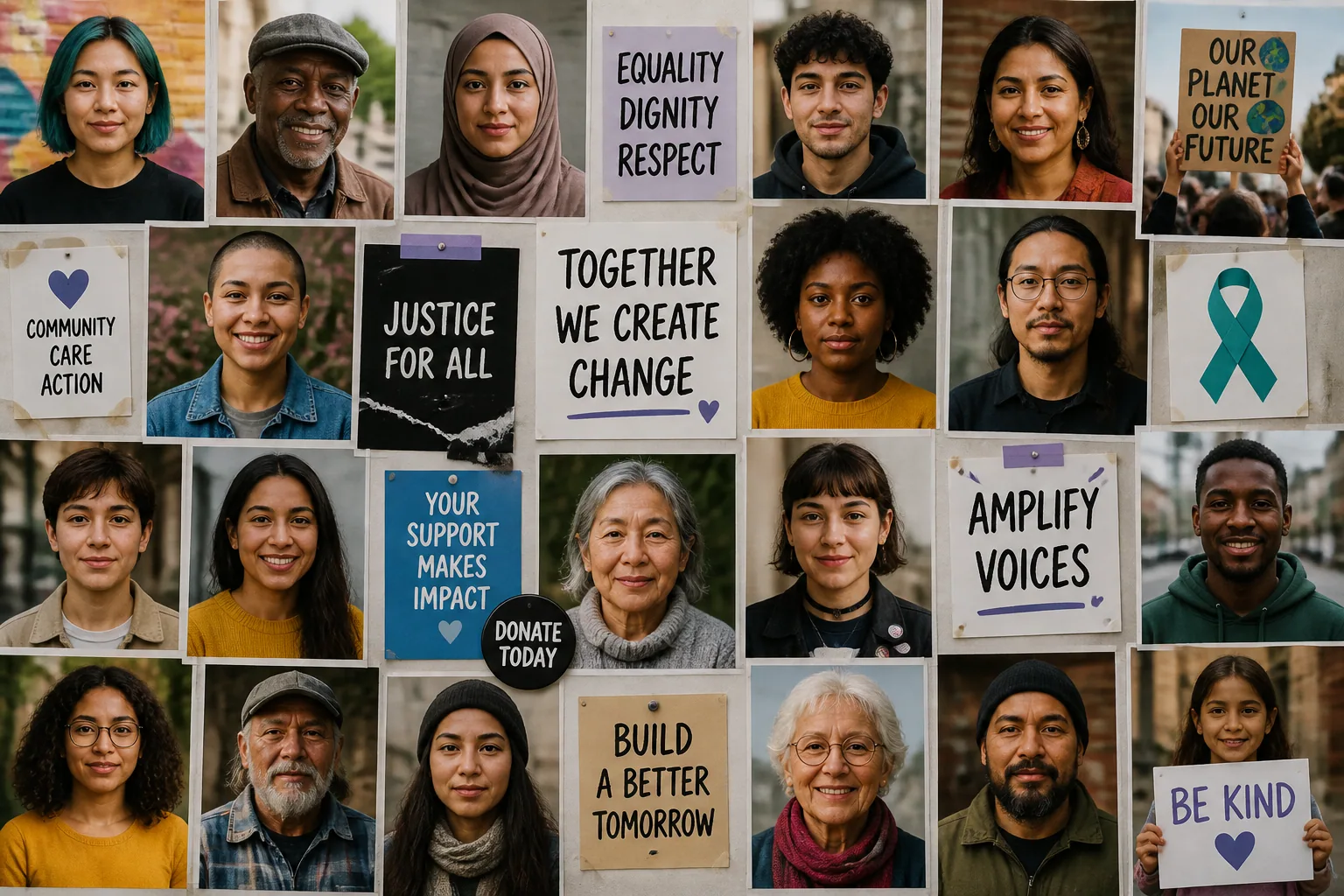
Creating AI Portraits with Purpose: How to Use Them for Social Impact and Community Work
AI-generated portraits are often treated as a novelty, something fun to post, share, or test for creative inspiration. But they can do much more than create eye-catching visuals. Used thoughtfully, AI portraits can support fundraising, amplify awareness campaigns, reflect underrepresented identities, and help communities tell stories that feel more immediate and emotionally resonant. The key is not just making attractive images. It is using them with care, consent, and a clear social purpose.
This matters now because AI is already widespread in the nonprofit sector, but impact is still uneven. According to the 2026 Nonprofit AI Adoption Report, 92% of nonprofits report using AI in some capacity, yet only 7% say it has led to major improvements in organizational capabilities. In health-focused nonprofits, Deloitte found that 61% are using generative AI and nearly 75% say it has had a moderate to great impact on reducing inefficiencies, but only 1% have deployed it at scale. The takeaway is simple: adoption is growing faster than strategy. AI portraits can be part of the solution if they are grounded in real community value rather than disconnected experimentation.
Why AI Portraits Matter Beyond Aesthetics
Portraits have always carried social power. They shape who gets seen, how they are seen, and what stories become believable. In advocacy work, that makes portraiture especially important. A well-made visual can humanize a cause, make a campaign more memorable, and help people emotionally connect to issues that might otherwise feel abstract. AI portraits extend that power by making it easier to produce thematic, personalized, and iterative visuals without the high cost of a traditional photo production process.
For nonprofits and community organizers, this can be especially useful when budgets are tight. The 2025 AI for Humanity Report from Fast Forward found that 30% of AI-powered nonprofits have budgets under $500,000, and 40% have been using AI for a year or less. It also showed a dramatic scale gap: organizations with budgets over $5M reported a median reach of 7 million people, while those with very small budgets reached under 2,000 lives. That does not mean AI portraits solve scale challenges on their own, but it does show why accessible content tools matter. When an organization can create strong visuals without a large production budget, it can direct more resources toward outreach, services, and community engagement.
At the same time, funding remains a major bottleneck. Fast Forward reports that 84% of AI-powered nonprofits say funding for systems, tools, and talent is what would most help them scale impact. So the real opportunity is not just to make portraits faster. It is to make visual storytelling more sustainable, more inclusive, and easier to integrate into campaigns that already have a social mission.
Using Themed AI Portraits for Fundraising and Awareness Campaigns
One of the most practical uses of AI portraits is campaign storytelling. Themed portrait series can help nonprofits and creators build a visual identity around a cause, such as mental health, climate resilience, disability justice, youth empowerment, or cultural preservation. Because AI images can be quickly adapted to different themes, teams can create a coherent visual language across social posts, email campaigns, landing pages, posters, and event materials.
For fundraising, portraits work best when they make a donor feel a specific human connection. Instead of generic stock imagery, a themed portrait can center a real community member, a staff member, a volunteer, or a symbolic representation of the people served. For example, a housing nonprofit might use portraits that communicate dignity, stability, and community belonging. An arts program might create portraits inspired by student identity, neighborhood history, or local traditions. The goal is not spectacle. It is emotional clarity.
The strongest campaigns often pair imagery with a clear call to action. An AI portrait can spark attention, but the message has to explain what the audience should do next, whether that is donating, signing a petition, attending an event, or sharing resources. Because AI portraits can feel polished and futuristic, they are especially useful for awareness work when the topic may otherwise be overlooked. A themed portrait series can help people recognize a campaign instantly and remember it later.
If you want a simple way to test this approach, tools like Selfie AI: AI Photo Generator can help you generate stylized portrait concepts quickly, especially for personal advocacy profiles, campaign mockups, or community presentations. Used with care, it can support the early visual development of a project before you invest in a larger campaign.
Representing Underrepresented Identities with Care and Collaboration
AI portraits become truly meaningful when they help people see themselves more accurately and more beautifully than mainstream visual systems often do. But this is also where the risks are highest. Historically marginalized communities are often underrepresented in training data, stereotyped in outputs, or flattened into visual clichés. That means inclusive portrait work cannot rely on default prompts or generic style references alone.
Microsoft Research’s Project Volano is a useful example of a better direction. It is designing tools such as Community Libraries and Community Scorers so historically marginalized groups can help define how they are represented in AI-generated media. That idea is important because representation should not be done to communities. It should be shaped with them. When people help decide which visual cues feel respectful, familiar, or affirming, the final portraits are more likely to reflect lived experience instead of outsider assumptions.
A related MIT-SERC case study on South Asian cultural representation in text-to-image models found frequent failures in the recognition of traditional dress, color, scenery, and identity, often linking culture with stereotype rather than nuance. The study highlights the need for community-led prompt design and qualitative evaluation. In practice, that means you should not just ask, “Does the image look good?” You should ask, “Does this image feel accurate, respectful, and recognizable to the people it represents?”
Community collaboration can take many forms. You can invite participants to co-write prompts, review drafts, define style boundaries, or select which portraits are published. You can also build small advisory groups made up of the very communities the project hopes to serve. This is especially important in projects involving race, ethnicity, disability, gender identity, faith, or immigration status, where a portrait can easily become symbolic in ways that people did not consent to or do not recognize as true to their experience.
Consent, Authenticity, and the Ethics of AI-Generated Visuals
Ethics are not a side issue in AI portrait work. They are the foundation. A portrait does not just show a face. It communicates identity, belonging, and presence. That makes misuse particularly harmful. Research on consent in AI points out that traditional legal consent for likeness or data use often fails to account for future, unforeseen outputs or distributions of AI-generated content. In other words, someone may agree to one use and later find their image or style reused in contexts they never intended. This creates scope, temporality, and autonomy challenges that simple permission forms do not fully solve.
There are also direct risks around face use and identity misuse. An audit discussed in Procedia Computer Science points to dangers including identity theft, impersonation, unclear data practices, psychological harm, and erosion of trust when representations mislead. For cause-based campaigns, trust is everything. If an audience suspects that an image is deceptive, manipulated without permission, or culturally careless, the campaign can lose credibility very quickly.
A good ethical standard is to be transparent about what the image is and is not. If a portrait is AI-generated, say so. If it is inspired by a community but not an actual person, say so. If participants contributed prompts or reference notes, explain that as part of the process. Transparency does not weaken a campaign. It strengthens it by showing respect for the people viewing it and for the people depicted.
You should also be careful about authenticity in emotionally sensitive contexts. For example, AI portraits can be powerful for symbolic storytelling, but they should not replace real testimonials, real documentation, or real reporting when those are available. A portrait can support a story, but it should not fabricate a story. The more serious the issue, the more careful the visual framing must be.
How Nonprofits and Creators Can Launch Community-Driven Portrait Projects
A community-driven portrait project works best when it follows a clear sequence. Start with the purpose. Are you trying to increase donations, build identity pride, recruit volunteers, commemorate a local issue, or create a public-facing archive of stories? Once the purpose is clear, decide who the project is for and who has decision-making power.
Next, define participation. Will people submit selfies, answer prompts, vote on styles, or approve final outputs? Will the project include workshops, listening sessions, or drop-in editing opportunities? The more participatory the process, the more likely the portraits will feel like shared cultural assets instead of extracted content. This approach also aligns with community art models such as CripTech AI Lab, which explores disability, identity, and ownership through workshops, self-expression tools, and exhibitions. Its example shows how AI art can serve as an entry point for collective creativity rather than a one-way production pipeline.
After that, set boundaries. Decide what kinds of images will not be made, what data will not be stored, how long files will be retained, and who can approve publication. If participants are minors, survivors, or members of vulnerable communities, these rules should be even tighter. The project should feel safe enough that people can participate without worrying that their likeness will be misused later.
Finally, plan the distribution. Community-driven portraits are strongest when they are not trapped in a folder. They should live where people already gather, such as newsletters, exhibitions, community meetings, fundraising pages, social media campaigns, local press kits, or partner organization materials. The more visible the work becomes, the more likely it is to create real social connection.
Protecting Artistic Integrity While Serving a Social Mission
A common fear is that social-impact use of AI portraits will make the work less artistic. In practice, the opposite can be true. Constraints often sharpen creativity. When artists and organizers must think carefully about story, consent, and audience, they tend to make more intentional and meaningful images. The visual style becomes part of the message rather than just decoration.
Protecting artistic integrity means giving the portrait a point of view. It might mean using a consistent color palette tied to a community’s history, a set of symbolic references that come from participants, or a visual language that reflects local heritage. It also means resisting the urge to over-polish everything. Some of the most powerful AI portrait projects work because they leave room for individuality, imperfection, and emotional specificity.
Good artistic practice also includes accountability. If an output feels stereotyped, generic, or too commercially styled for a grassroots cause, revise it. If a community reviewer says a portrait feels off, listen closely. Artistic integrity is not just about the creator’s taste. It is about whether the image serves the mission and the people it claims to represent.
Common Mistakes to Avoid in Cause-Based AI Portrait Campaigns
The first major mistake is using AI portraits as a shortcut for real engagement. A beautiful image cannot replace listening, service delivery, or actual community organizing. If the campaign has no substantive action behind it, the portrait becomes empty branding.
The second mistake is relying on stereotypes because they are visually easy. That includes overusing symbolic props, flattening cultural detail, or making identity legible only through simplified markers. Research on representation failures shows how quickly a model can miss nuance or default to cliché, especially when cultural context is complex.
The third mistake is hidden consent. People may agree to be photographed or to upload a selfie without fully understanding how the output could be used later. Because AI systems can create new versions, new styles, and new contexts, consent has to be revisited as the project evolves.
The fourth mistake is not preparing for trust concerns. Fast Forward’s report shows that 71% of AI-powered nonprofits already use risk-assessment or mitigation processes for issues like privacy and trust. That should be considered a baseline, not an advanced practice. If you are not documenting your risks, your use case is probably not ready for public release.
The fifth mistake is failing to label AI-generated content clearly. In social impact work, confusion can damage credibility and make communities feel misled. Even when the art is well-intentioned, unclear disclosure can undermine the entire effort.
Examples of Meaningful AI Portrait Use for Community Engagement
AI portraits can support many kinds of community work when used responsibly. A neighborhood nonprofit might create a portrait series celebrating volunteers, elders, and local organizers to build pride and encourage donations. A health advocacy group might use themed portraits to humanize a campaign around access, dignity, and care. An arts collective might invite residents to contribute prompts about their hopes for the community, then turn those ideas into a public exhibition.
They can also support internal community building. Staff recognition campaigns, donor appreciation, board recruitment materials, and volunteer spotlights can all be made more engaging through portraits that feel personal rather than corporate. In educational settings, AI portraits can help students explore identity, future aspirations, or local history through visual storytelling.
There is also strong potential in inclusion work. Communities that have historically been left out of mainstream image libraries can use AI portraits to imagine themselves in roles, settings, and futures that are rarely shown. When the process is participatory, the result can be both creative and empowering. It becomes less about simulation and more about recognition.
A Practical Checklist for Starting Your Own AI Portrait Impact Project
Before you begin, ask four core questions. What social issue does this project support? Who is the intended audience? Who has approval over the images and the message? What real-world action should the portraits inspire?
Then make sure you have the basics in place. Write a simple consent process. Define how images will be used, where they will appear, and how long they will be stored. Create a review step for community members or advisors. Decide whether the project needs disclosure language, especially if the portraits could be mistaken for documentary photography.
Next, test the visuals with a small group before launching publicly. Look for accuracy, tone, cultural detail, and emotional effect. Ask whether the portraits feel empowering or extractive. Ask whether the images support the story or distract from it. This is where community feedback matters most.
Finally, measure success in terms of impact, not just clicks. Did the campaign improve trust? Did it attract donations, volunteers, or event attendance? Did it help people feel seen? Did it create better relationships between the organization and the community? If the answer is yes, then the portraits are doing more than looking good. They are serving a purpose.
Used with intention, AI portraits can become a meaningful bridge between creativity and civic action. They can help nonprofits reach people, help creators tell more inclusive stories, and help communities shape their own visual futures. The most important rule is also the simplest: make portraits that honor people first, and technology second.