Beyond the Selfie: How AI Portraits Can Enhance Mental Well-Being and Self-Expression
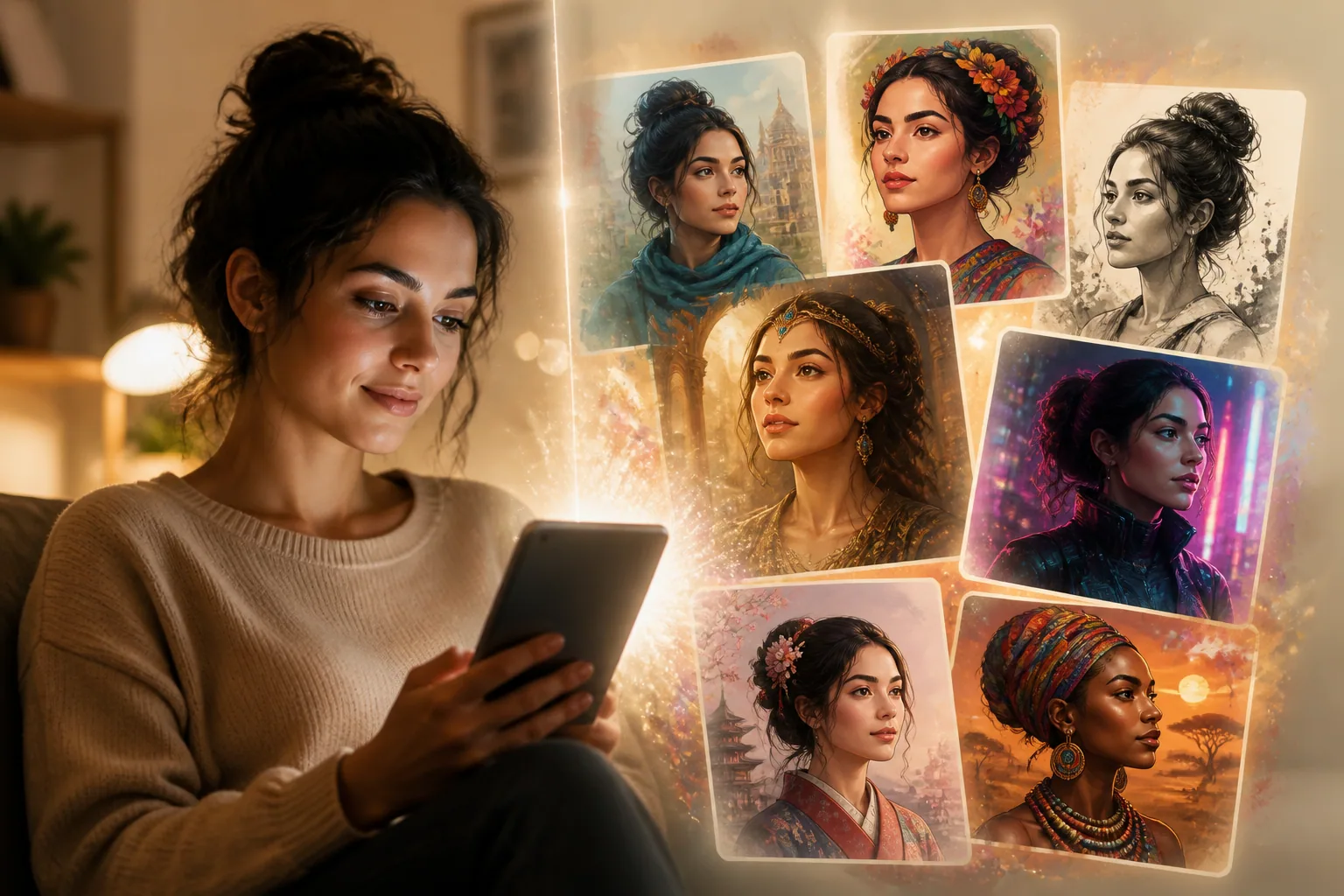
AI portraits are often treated like a fun visual trend, but they can also become something more meaningful. When used thoughtfully, they can support confidence, creativity, and emotional reflection. They can help people see themselves in a new light, experiment with identity in a low-pressure way, and tell stories that go beyond a simple profile picture. In that sense, AI portrait tools are not just about appearance. They can also become a gentle mirror for self-expression and self-discovery.
Why AI Portraits Matter Beyond Aesthetics
At first glance, an AI portrait may seem like a polished image made for social media or personal branding. But the deeper value often comes from the experience of creating it. Choosing styles, themes, moods, and visual details invites a person to think about how they want to be seen, what feels true to them, and what parts of themselves they want to explore. That process can make portrait creation feel personal instead of purely cosmetic.
Research on AI-generated art suggests that the experience can positively influence mood and emotional states. In one study linked to an immersive AI art installation, participants reported significantly higher pleasure and excitement afterward, and neural markers correlated strongly with improved well-being. That matters because it suggests that visual co-creation is not only entertaining, but can also shift emotional state in a measurable way. Source: https://www.sciencedirect.com/science/article/pii/S0197455625001005
The Mirror Effect: Seeing Yourself in a New Light
One of the most interesting parts of AI portraits is the mirror effect. When you see yourself reimagined as a professional portrait, a fantasy character, a historical figure, or a completely unexpected aesthetic, your brain has to reconcile familiar identity with a new visual frame. That can create a small but powerful moment of reflection. You are still you, but you are seeing possibilities that may have felt hidden or overlooked.
This kind of re-seeing can matter emotionally. People often carry a narrow internal image of themselves, shaped by routine selfies, mirrors, or social comparisons. AI portraits interrupt that pattern. They can reveal features, expressions, and moods in a way that feels fresh, sometimes even surprisingly affirming. Instead of focusing only on perceived flaws, the viewer may notice style, presence, softness, strength, or playfulness.
This is also one reason AI tools can lower barriers to self-expression. Art therapists report that AI-generated art can help people who feel blocked by a lack of artistic skill or fear of judgment. It can support exploration of personal themes, identity, emotions, and symbolic narratives without requiring someone to be a trained artist. Source: https://pmc.ncbi.nlm.nih.gov/articles/PMC11634044/
How Visual Reinvention Can Influence Mood and Confidence
A portrait is never just a picture. It carries a feeling. When an image makes you look composed, radiant, powerful, or imaginative, it can subtly affect how you carry yourself afterward. That does not mean an AI portrait should replace real self-esteem work, but it can support it by offering a moment of recognition or delight. For some people, that is enough to shift mood, spark motivation, or encourage more confident self-presentation.
This emotional lift is especially valuable because creative interventions have been linked to mental health benefits in broader contexts. An umbrella review of AI-driven art therapy found improvements in emotional regulation, reduced symptoms of anxiety and depression, and better communication in populations including trauma survivors and people with ASD. Source: https://pmc.ncbi.nlm.nih.gov/articles/PMC12541162/
Even outside formal therapy, the basic principle still applies: making and viewing meaningful images can help organize feelings. For some people, seeing an idealized but still recognizable version of themselves can feel encouraging. For others, it may provide a low-stakes way to test how different aesthetics affect self-perception, from bold and dramatic to calm and understated.
Using Portrait Themes to Tell Your Personal Story
Themed portraits are especially powerful when they go beyond generic beauty and start telling a story. A portrait inspired by your profession, heritage, favorite season, creative interests, or future goals can carry more emotional depth than a standard headshot. It becomes a visual summary of who you are, what you value, and how you want to move through the world.
That storytelling aspect is not trivial. Research on AI and identity exploration describes generative art as a space where controlled randomness can reveal unexpected stylistic elements and help users discover new aesthetic selves. In other words, the AI can introduce enough surprise to help you notice aspects of your identity you might not have articulated before. Source: https://pmc.ncbi.nlm.nih.gov/articles/PMC11965670/
If you think about it that way, a portrait is not only a likeness. It is a prompt for self-understanding. The theme you choose often says something about the version of yourself you are ready to meet.
Exploring Culture, Passions, and Identity Through AI Art
For many people, the most meaningful AI portraits are the ones that connect to culture and personal history. Clothing, color palettes, symbols, settings, and stylistic references can reflect roots, traditions, or family memory. They can also honor passions like music, travel, fitness, spirituality, fashion, or entrepreneurship. When these details are intentional, the portrait becomes a more authentic expression of identity rather than a generic enhancement.
This is especially important because image alignment matters. A study on AI-generated art tied to emotional descriptions found that images based on felt emotions, rather than external ideals or stereotypes, were preferred and more effective for self-awareness and expression. When images drift too far into cliché, alignment and depth suffer. Source: https://arxiv.org/abs/2304.13324
That insight is useful for anyone using AI portraits for self-exploration. The best portraits are often the ones that capture an inner truth, not just an aesthetic trend. A meaningful image might reflect calm, resilience, ambition, nostalgia, playfulness, or transformation. Those qualities can be visualized in surprisingly rich ways when the portrait is guided by personal narrative.
Safe Experimentation: Trying New Looks Without Real-World Pressure
One of the most approachable benefits of AI portrait tools is the freedom to experiment. You can try dramatic hair, formal styling, fantasy costumes, historical looks, or completely imaginative scenes without the cost, time, or social pressure of making those changes in real life. For many people, that makes creativity feel safer and more open-ended.
This kind of experimentation can be especially useful if you are curious about a style but unsure whether it fits you. A generated portrait lets you observe your reaction before making any real-world changes. Do you feel energized by a sharper look, more softness, more color, or more elegance? The answer can tell you something useful about your preferences and your mood.
It can also be a playful way to loosen self-criticism. In a low-pressure environment, there is more room to ask, “What if?” That question is often the beginning of creative growth.
AI Portraits for Personal Branding and Authentic Self-Expression
AI portraits can also support personal branding, especially for entrepreneurs, creators, and professionals who want a polished visual identity. A strong portrait can communicate competence, style, and approachability at the same time. That said, the most effective branding images usually feel like a believable extension of the person, not a disguise.
Research suggests that generativity tools can increase perceived creative performance. When users see AI art tools as useful, they tend to report higher creative design performance, partly through artistic perception, engagement, and aesthetic judgment. Source: https://www.frontiersin.org/journals/psychology/articles/10.3389/fpsyg.2026.1755561/pdf
That is relevant for branding because the image-making process itself can sharpen your visual identity. You begin to notice which tones feel professional, which expressions feel warm, and which visual cues best reflect your role. A portrait can therefore be both practical and expressive, helping you present yourself with more clarity and intention.
If you want to explore this in a simple way, a tool like Selfie AI: AI Photo Generator can make the process easier. It lets you turn ordinary selfies into a wide range of portrait styles and scenarios, which can be useful when you want to test branding looks, creative concepts, or new visual identities. You can find it here: https://findthe.app/selfie-ai-0xi7wd
The Mental Health Balance: Idealized Images vs Everyday Reality
This is where mindfulness matters most. AI portraits can be uplifting, but they can also become problematic if they push people into comparison, perfectionism, or dissatisfaction. Studies of selfie behavior show a clear pattern: taking and posting selfies is often linked with more positive appearance-specific self-evaluations, while editing selfies is strongly associated with more negative general and appearance-specific self-esteem. Source: https://journals.sagepub.com/doi/abs/10.1177/01461672231158252
Related research on AI beauty filters also suggests caution. Excessive editing is associated with lower appearance-specific self-esteem, greater body dissatisfaction, and increased appearance anxiety. Source: https://onlinelibrary.wiley.com/doi/full/10.1002/cb.70141
On top of that, viewing selfies on social media has been linked to greater facial dissatisfaction, partly because of appearance comparisons and self-objectification. Source: https://www.mdpi.com/1660-4601/17/2/672
The takeaway is not to avoid AI portraits. It is to use them with perspective. An idealized portrait can be fun, inspiring, and even healing if it stays in conversation with your real self rather than replacing it.
Mindful Tips for Using AI Portraits to Support Wellness
If you want AI portraits to support wellness, start by setting an intention. Ask yourself whether you are looking for play, inspiration, self-discovery, branding, or emotional reflection. A clear intention helps prevent the experience from drifting into endless comparison.
It also helps to balance idealized and realistic images. Create portraits that feel beautiful and imaginative, but also keep some versions grounded in your actual features and personality. That balance can protect against the sense that your worth depends on looking “better” than real life.
Another helpful practice is to pay attention to your emotional reaction. If a portrait makes you feel curious, energized, or seen, that is useful information. If it makes you feel inadequate, notice that too. The image may be revealing a comparison habit, a hidden insecurity, or a desire that deserves gentle attention rather than criticism.
It can also help to avoid using AI portraits as a constant mirror. They work best as occasional tools for reflection and creativity, not as a substitute for ordinary self-acceptance. Real well-being is built through everyday life, relationships, movement, rest, and self-compassion, not only through visual enhancement.
Turning AI Portraits Into a Practice of Self-Discovery
The most interesting use of AI portraits may be the simplest one: treating them as prompts for self-inquiry. You can ask what a certain image says about your values, your confidence, your mood, or the story you want to tell. You can notice which versions of yourself feel authentic, which feel aspirational, and which feel completely unexpected.
That process can be surprisingly revealing. A portrait might show your desire for calm, your love of adventure, your connection to culture, or your wish to be seen with more softness. Another might make you realize that you are ready for a new chapter. In that way, AI portraits become less about chasing perfection and more about observing change.
When used this way, they can support both creativity and emotional well-being. They can lower barriers to expression, offer a small mood lift, and help you explore identity with curiosity instead of pressure. Beyond the selfie, that is where their real value begins.