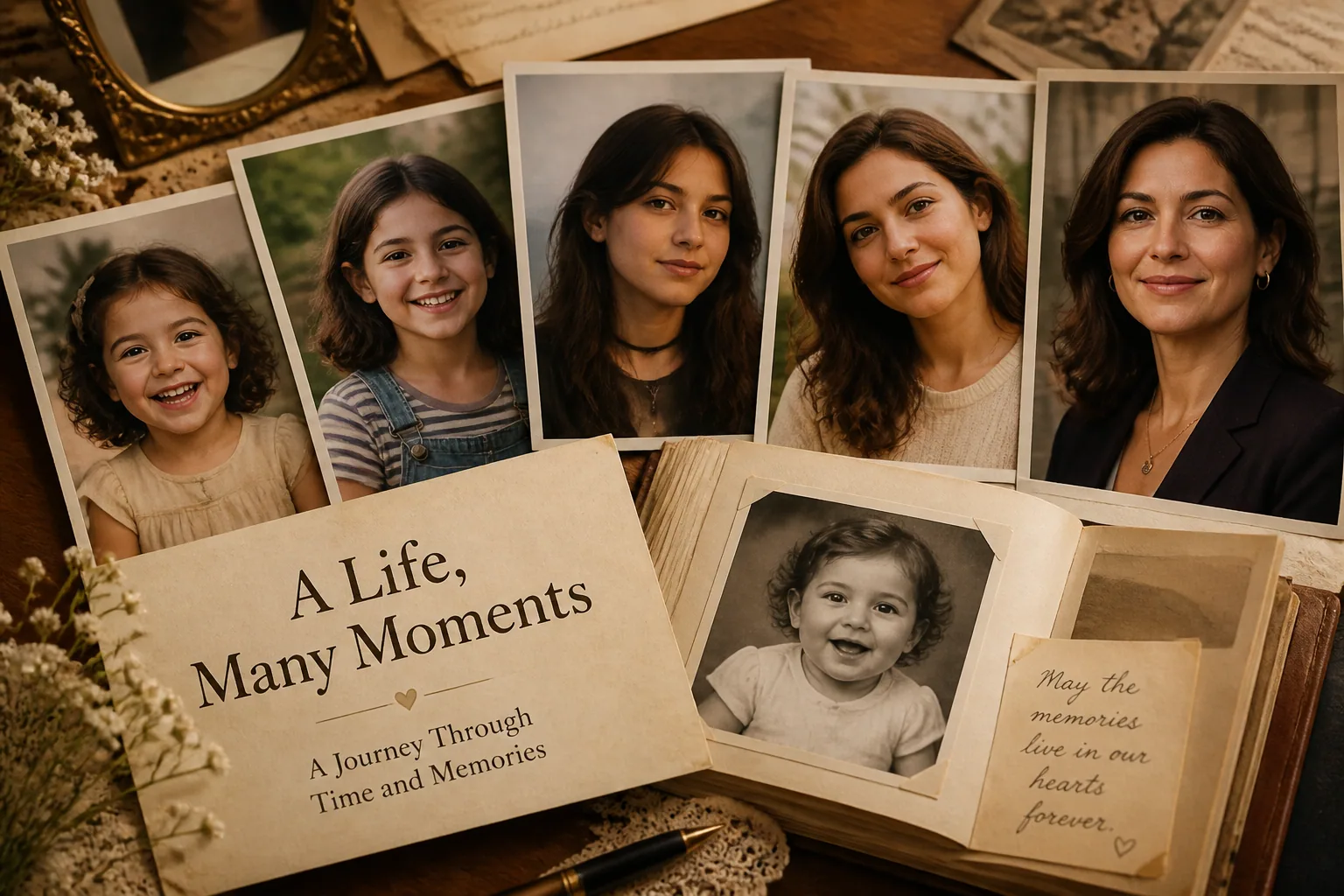
AI Selfies as Time Capsules: How to Preserve Your Visual Story for the Future
AI-generated selfies are usually treated like a quick novelty, something you post, share, and forget. But they can also become something far more meaningful: a visual record of who you were at a particular moment in life. When you approach them with intention, AI portraits can capture your style, your environment, your cultural influences, and even the small details that define a season of your life. In that sense, they stop being just content and start becoming personal archives.
That shift matters because photographs have always been one of the most powerful forms of memory. A well-made portrait can hold far more than a face. It can preserve a mood, a relationship, a stage of adulthood, or a family story. AI simply adds another layer of creative control. You can decide how you want to be remembered, while still keeping enough realism and context for the image to feel grounded in your actual life.
Why AI Selfies Can Be More Than a Trend
The biggest reason AI selfies deserve a place in your long-term memory archive is that they let you document identity in a highly deliberate way. Traditional photography records what happened to be in front of the camera. AI portraits can do that too, but they also let you design a scene that reflects your values, routines, and aspirations. That means you can preserve not only your appearance, but also the story around it.
This is especially useful in moments that are easy to overlook while you are living them. A new job, a move to another city, a pregnancy, a graduation, a major haircut, a period of healing, or a year of travel can all be turned into portrait series that later function like visual chapters in your life. Years from now, those images may mean more than a thousand casual phone selfies because they were created with the intention of being remembered.
There is also an important cultural reason to treat these portraits seriously. AI images can feel detached if they are only used for trend-chasing or surface-level aesthetics. Research on AI-generated art has noted that many people hesitate to see it as authentic because it can lack emotional connection, worldly context, or human presence in its creation. That is exactly why personal AI selfies should be built with real context, not just visual polish. When the image is tied to your actual life, it becomes much easier to see it as part of a genuine visual record rather than a disposable trend.
Thinking Like a Future Historian: What Your Portraits Should Capture
If you want AI selfies to function like time capsules, the best mindset is to think like a future historian studying your own life. Ask yourself what someone would need to understand about this moment in order to know who you were. That does not mean every portrait has to look documentary or plain. It simply means the image should contain clues that will still make sense years later.
A strong time-capsule portrait might capture your age range, your hair style, your favorite colors, the kind of work you do, the city you live in, the seasons you spend most of your time in, or the communities you belong to. It might also reflect the family or cultural traditions that shape how you dress and present yourself. These details matter because they anchor the image in lived reality, which helps the portrait age better and feel more meaningful over time.
AI portrait research also reminds us why realism matters. A recent study of 1,664 participants aged 20 to 69 found that people could distinguish AI-generated portraits from real photographs with a mean accuracy of 85.2 percent, with lower accuracy among older participants and when images were viewed on mobile devices. Separate research has also found that AI-generated faces tend to be more symmetrical and attractive, but less expressive, distinctive, and memorable than real faces. In other words, if you want a portrait that feels like a true record of you, it helps to avoid overprocessed perfection and keep some of your natural quirks visible. Sources: https://doi.org/10.48550/arXiv.2603.24048 and https://www.scientificamerican.com/article/how-to-spot-an-ai-generated-face-according-to-science/
How to Choose Outfits, Styles, and Settings That Reflect Your Life Stage
Outfits and settings do a lot of storytelling in a portrait. They tell viewers how you live, what matters to you, and what season of life you are in. For a future-facing archive, the best choice is usually not the most dramatic one, but the one that feels most representative. If you are a student, a young professional, a parent, a creator, or someone reinventing your style, let that reality show up in the image.
Think of clothing first. A wardrobe choice should reflect the version of yourself you actually want to remember, not just what is fashionable right now. A tailored blazer, a favorite sweater, a cultural garment, a wedding dress, a graduation outfit, or a practical everyday look can each tell a very different story. The same is true for color palettes. Neutral, classic tones often age well, while highly trend-coded colors or filters can make an image feel dated faster.
Settings matter just as much. A portrait on a city street, in a kitchen, at a desk, near the ocean, in a family home, or surrounded by seasonal scenery can preserve context that will later feel precious. If you are creating a portrait series, try to include at least one setting that truly belongs to your life instead of a generic luxury backdrop. That kind of specificity is what turns an image into a memory.
If you want a simple way to experiment with different life-stage styles, a tool like Selfie AI: AI Photo Generator can help you create portraits across professional, vacation, formal, fitness, historical, and custom scenarios while still keeping your likeness central. You can see it here: https://findthe.app/selfie-ai-0xi7wd
Creating Yearly or Milestone-Based AI Portrait Series
One of the best ways to turn AI selfies into a true archive is to make them recurring. A single portrait is a snapshot, but a series becomes a story. When you create portraits every year, or during major milestones, you build a timeline that is much more powerful than one-off images scattered across apps and social feeds.
A yearly portrait series can be very simple. You might choose the same month each year, the same pose, or the same general setting. The consistency makes changes easier to notice over time. You can see how your hair evolved, how your style shifted, how your confidence changed, or how different life events shaped the way you presented yourself. That type of repetition can be deeply moving when you look back on it later.
Milestone-based series work just as well. You can create images for birthdays, graduations, new jobs, engagements, pregnancies, anniversaries, or moves to new places. For each milestone, keep one or two images that feel visually strong and also historically meaningful. If you make this a habit, you are essentially building a portrait diary of your adult life.
A helpful practice is to name each series clearly from the start. Instead of saving files as random downloads, give them structure like “2026 birthday portrait” or “first year in Paris.” That small step makes the archive easier to search later and gives every image a place in the larger story.
Keeping AI Portraits Authentic to Your Identity and Culture
Authenticity is what separates a memorable visual legacy from a generic AI feed. The more the image reflects your real identity, the more likely it is to matter in the future. That includes physical details, but also cultural and family context. Clothing traditions, religious attire, hairstyle choices, jewelry, language cues, and location can all signal where you come from and how you see yourself.
It is also important not to smooth away every personal detail in the pursuit of a flawless image. AI systems often produce faces that are unusually symmetrical and polished, but real identity is rarely that neat. Freckles, smile lines, asymmetry, facial hair, glasses, and other subtle features can make a portrait feel more like you. Those details help a future viewer recognize the human being behind the image rather than a generic ideal.
At the same time, authenticity does not mean avoiding creativity. You can place yourself in a historical setting, a dreamlike landscape, or a symbolic scene as long as the portrait still connects to your actual story. For example, if your family has a strong tradition of formal portraiture, or if a certain era or cultural motif shaped your upbringing, an AI portrait can honor that heritage rather than dilute it. The key is to make the image feel rooted, not random.
This is also where emotional context matters. A portrait connected to a family gathering, a rite of passage, or a meaningful city will feel far more authentic than one generated only for novelty. When the image carries personal significance, it becomes easier to defend its place in your archive as a real part of your story.
Trendy vs Timeless: Making Images That Age Well
A good time capsule should not age too quickly. That does not mean it needs to be dull. It means you should be intentional about which elements are likely to still make sense ten or twenty years from now. Trends can be fun, but if every detail in the portrait is tied to a passing style, the image may lose its power as a keepsake.
Timeless choices tend to work better for archival portraits: natural lighting, classic compositions, simple backgrounds, clothing with clean lines, and expressions that feel relaxed rather than overly posed. These choices create flexibility because they leave room for the portrait to be interpreted later without being locked to one moment in internet culture.
That said, there is room for a small amount of trend. A jacket cut, a hairstyle, a makeup look, or a color story can help place the image in a specific era. The trick is balance. Use one or two trend-driven details, but keep the rest restrained. That way, the portrait still captures the spirit of the moment without becoming visually obsolete too fast.
The same logic applies to filters and stylization. Heavy effects may look exciting today, but they can obscure your features and reduce the portrait’s long-term value. If you want your future self and your family to recognize you clearly, aim for polish without overprocessing. Remember that the goal is not simply to create a beautiful image. It is to create a durable memory.
Adding Context: Captions, Dates, Stories, and Metadata
The image itself is only part of the archive. Context is what turns a picture into a historical record. Without dates, captions, and notes, even the best portrait can become vague over time. A future viewer may know what the image looks like, but not why it matters. That is why every important AI selfie should be paired with written context.
At minimum, save the date and a short caption. Even a few lines can make a big difference. You might note where you were living, what you were doing in life, what the outfit represented, or why you created the portrait in the first place. If the image connects to a family memory, a cultural practice, or a special accomplishment, write that down too. These little details become priceless later.
Metadata also matters. Use clear file names, keep folders organized by year or event, and preserve original file versions when possible. If your storage system allows it, keep information about the prompt, the style settings, and the platform used to generate the image. That can help you recreate or compare portraits later, especially if you are building a recurring series.
Think of captions and metadata as the frame around the portrait. The image is the face of the memory, but the surrounding information is what helps future generations understand it correctly.
How to Archive, Back Up, and Organize AI Selfies for the Long Term
If a portrait is meant to last, it needs a preservation plan. Digital images are easy to create, but they are also easy to lose through device failures, accidental deletion, app changes, or forgotten passwords. That is why long-term archiving is not optional if you want AI selfies to become part of your family record.
The Library of Congress recommends that at least two copies of important digital photos be stored on different media, such as a hard drive, cloud storage, or removable media, and in physically separate locations. It also advises checking images annually and migrating media every five years or as needed. This is a strong baseline for AI portrait archives too. Source: https://digitalpreservation.gov/personalarchiving/photos.html
For better long-term usability, archival guidance also favors lossless and uncompressed or self-describing file formats, along with durable and maintainable storage media such as RAID systems, tape backups, or trusted digital repositories. Routine monitoring, redundancy, and migration are part of the preservation process, not one-time tasks. Source: https://www.archives.gov/preservation/formats/motion-picture-film-future-usability
If you are keeping a personal portrait archive, a practical setup could look like this: one copy on your main computer, one on an external drive stored separately, and one in a reliable cloud account. Then, once a year, review the archive, verify that files open correctly, and update anything that has become disorganized. Simple habits like this dramatically improve the chances that your portraits will still be accessible decades from now.
The same logic applies to physical originals if you print them or store related materials. Protective storage, cool and dry conditions, and quality materials all help reduce deterioration. Archives guidance for negatives and transparencies recommends PAT-tested storage materials and careful environmental control. Source: https://www.archives.gov/preservation/storage/negatives-transparencies.html
Printing AI Portraits for Albums, Wall Art, and Family Keepsakes
Printed portraits feel different from images living only on a screen. They are easier to revisit casually, easier to share with relatives, and more likely to survive changes in software or devices. For that reason, print should be part of any serious visual legacy plan.
A printed AI selfie can live in a family album, be framed on a wall, or become part of a memory box. The format you choose depends on the purpose. Albums are best for series and chronological storytelling. Framed prints are best for milestone portraits. Smaller keepsake prints can be distributed to parents, grandparents, or siblings so the image becomes part of the family archive, not just your own.
When printing, choose the highest quality version available and avoid overcompressed files. If possible, keep a digital master file separate from the print version so you can reprint later. You may also want to print a caption or note on the back, especially for portraits connected to important events. A simple explanation can make the print much more meaningful decades later.
For family keepsakes, the most valuable portraits are often not the most glamorous ones. They are the ones that show you at a life stage your descendants may never see otherwise. That is what makes a portrait into an heirloom.
Using AI Selfies to Build a Visual Legacy for Future Generations
A visual legacy is not just a collection of attractive images. It is a record of presence. It says, I was here, this was my life, and this is what I wanted to remember about myself. AI selfies can serve that purpose beautifully when they are created with honesty, context, and care.
The most meaningful archives will likely combine several kinds of portraits: everyday looks, milestone images, cultural references, family-related scenes, and a few creative portraits that capture your imagination. Together, they show both who you are and how you see yourself. That combination is powerful because it preserves not only appearance, but self-understanding.
As AI tools become more capable, it may become even easier to generate polished faces and elaborate scenes. But the long-term value will still come from specificity. A future child, grandchild, or biographer will not care whether the portrait was trendy. They will care whether it felt real, whether it told the truth about your life, and whether it was preserved well enough to endure.
That is the real promise of AI selfies as time capsules. They can help you create a thoughtful, durable record of your identity while you are still living it. If you approach them as archives rather than disposable posts, they can become one of the most personal gifts you leave behind.