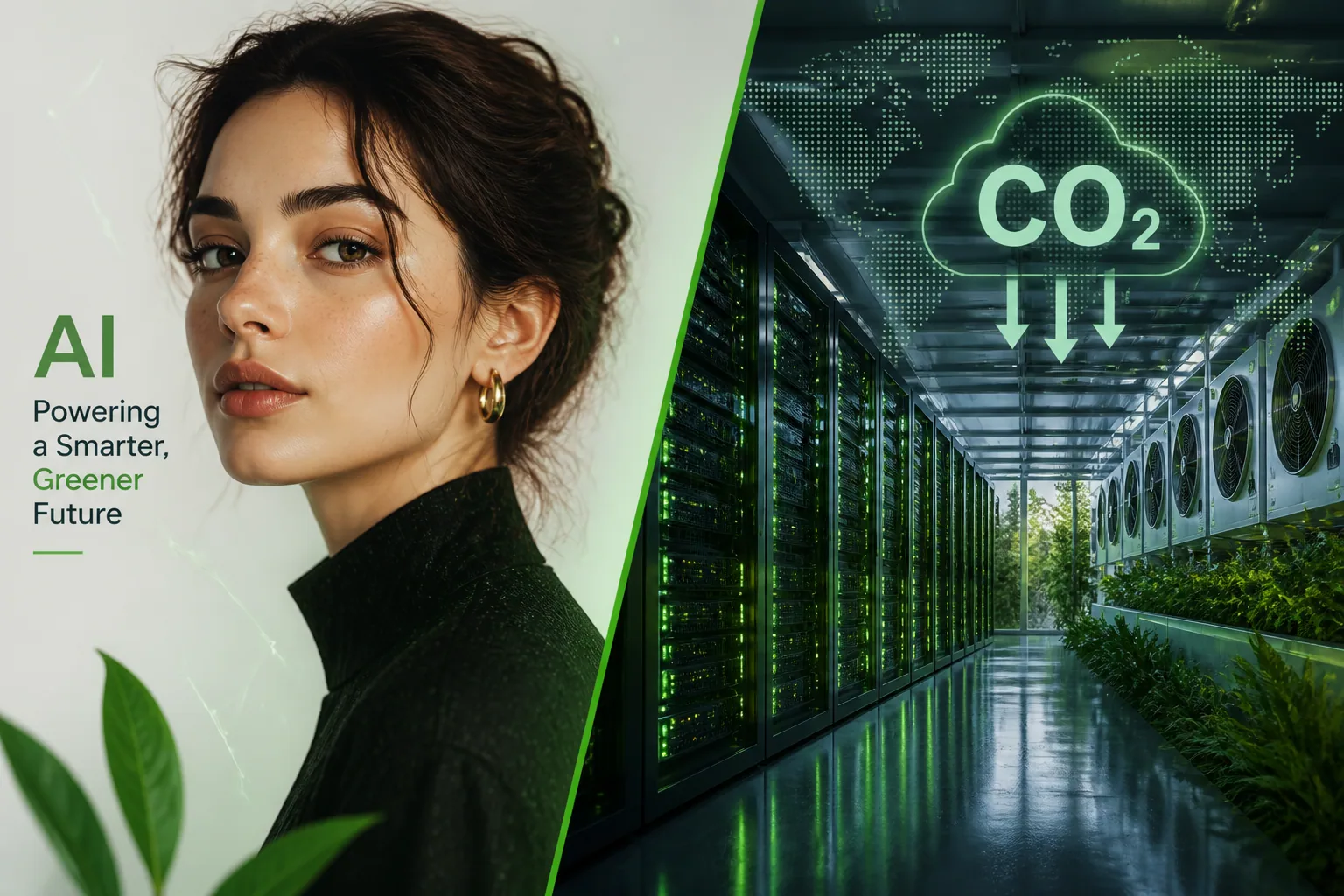
AI Portraits & the Carbon Cost: What Users Should Know in 2026
AI-generated portraits have become a fun, fast way to turn a handful of selfies into polished profile photos, fantasy characters, and animated clips. But in 2026, the question eco-conscious users are asking is a fair one: what is the environmental cost of all that convenience? The short answer is that every render has a real footprint. Behind the scenes, your portrait is created by GPUs in data centers, those data centers need electricity and cooling, and repeated re-renders or high-resolution exports increase the load. If you use animation features, the cost usually rises again because video workloads are much heavier than still images.
This does not mean you need to stop using AI portraits altogether. It does mean it helps to understand where the energy goes, why the footprint can grow quickly, and what responsible platforms should disclose. It also helps users make a few simple choices that can meaningfully lower impact without giving up the creative side of the experience.
Why AI Portraits Have an Environmental Footprint
AI portraits look lightweight from the user side because the process feels instant. In reality, each image request is a chain of computation. Your prompt or uploaded selfie is sent to remote servers, models process the request, and then the system generates one or more outputs. That work relies on specialized chips, networking equipment, storage, and the building infrastructure around it.
The scale matters. In 2026, global AI data centers are estimated to consume around 1,080 TWh of electricity, up from 647 TWh in 2024, according to one industry estimate. That would put AI data centers above Japan in electricity demand. The same research also estimates about 208 million tons of CO₂ from electricity use and roughly 1.2 trillion gallons of water consumed for cooling and related operations. Those figures are for the sector as a whole, not just portraits, but they show why even playful AI features sit inside a much bigger energy system. Sources: https://ibuidl.org/blog/ai-energy-consumption-datacenter-2026-20260310 and https://www.washingtonpost.com/business/2026/06/03/ai-data-centers-environment-climate-footprint/b17491d8-5f54-11f1-9c46-d6211372eede_story.html
For users, the important takeaway is simple. An AI portrait is not just a digital image. It is an act of computation, and computation consumes energy.
What Actually Uses Energy When You Generate an AI Selfie
A lot happens between tapping a button and getting your finished portrait. First, the system has to process your uploaded photos. Then it has to run the model that understands your face, your chosen style, and the scene you want. After that, it generates pixels, checks quality, and may apply upscaling or post-processing. All of this uses GPU time.
GPUs are especially power-hungry because they are designed to do many calculations at once. They are also in high demand, which means AI portrait apps compete with other AI services for the same infrastructure. On top of that, the data center itself has to stay cool. Cooling systems can be a major part of the total energy and water cost, especially when servers are densely packed and running constantly.
There is also the manufacturing side. Recent research on AI-specific GPUs flags the environmental burden of production, including energy use, carbon emissions, and resource depletion tied to making advanced hardware. So the footprint is not only about electricity during generation. It also includes the hardware supply chain that makes the service possible in the first place. Source: https://arxiv.org/abs/2607.01258
One useful way to think about it is this: the more complex the request, the more work the system has to do. A basic portrait with one output is cheaper than many variations, repeated retries, or a large batch of high-detail images.
Why Animated AI Videos Cost More Than Static Images
Animated selfie videos are exciting because they add motion, expression, and a more polished social media feel. But they also raise the computational cost. A single still image is one output frame. A video is many frames, often with extra work to keep movement smooth and consistent. That means more inference, more storage, and often more post-processing than a static portrait.
This difference matters because inference is where long-term usage adds up. One estimate cited in 2026 suggests that frontier model training runs may each produce about 500 to 1,000 metric tons of CO₂ equivalent, but inference workloads for services with around 100 million users can generate several multiples of that annually. In other words, training gets the headlines, but repeated everyday use is often where the bigger cumulative footprint appears. Source: https://ibuidl.org/blog/ai-energy-consumption-datacenter-2026-20260310
That is why animated features deserve extra attention from sustainability-minded users. If you only need a single profile picture, a static render will usually be the lighter choice. If you want motion, it may still be worth it, but it helps to use the feature intentionally rather than repeatedly regenerating clips until you get a perfect result.
The 2026 Reality: Efficiency Gains vs Growing Demand
The encouraging part of the story is that AI infrastructure is becoming more efficient. Newer data center designs can reduce environmental cost, and one detailed life-cycle analysis found that high-density, liquid-cooled data centers had the lowest environmental cost per exaFLOP among the options studied. That suggests better hardware layout and cooling can make a meaningful difference. Source: https://www.sciencedirect.com/science/article/pii/S0306261925020185
There are also promising signals on the power side. In the U.S., hyperscale data centers are estimated to use about 1.8% of national electricity, with roughly 54% of that power coming from fossil fuels. That makes cleaner energy procurement especially important. At the same time, companies are trying renewable and low-carbon approaches, including Nebius and Bloom Energy’s partnership to power more than 300 MW of AI infrastructure with fuel-cell systems, and Envision Energy’s 2 GW renewable power network in Chifeng, China, which is designed to integrate computing, green hydrogen, and storage. Sources: https://arxiv.org/abs/2606.05420 https://nebius.com/newsroom/nebius-and-bloom-energy-partner-to-power-ai-infrastructure-build-out and https://www.prnewswire.com/news-releases/envision-energy-unveils-2026-net-zero-action-report-at-vivatech-pioneering-future-energy-systems-for-civilizational-prosperity-302806207.html
The problem is that demand keeps growing. As models get better and users want more images, more styles, and more video, efficiency gains can be swallowed by volume. That is the classic rebound effect. A more efficient system does not automatically mean a smaller total footprint if people generate far more content than before.
How Companies Are Making AI Imaging Greener
The best sustainability efforts in AI imaging are not just about marketing. They involve real infrastructure and operational choices. Cleaner electricity is one piece. Smarter workload management is another. Trials in the U.K. involving Nvidia, Microsoft, EPRI, and others have shown that AI data centers can adjust power use dynamically, lowering demand when the grid is stressed and increasing use when renewable supply is abundant. That kind of flexibility can reduce peak loads and make AI services easier to fit into a cleaner grid. Source: https://www.tomshardware.com/tech-industry/artificial-intelligence/nvidia-backed-trial-shows-ai-data-centers-can-flexibly-adjust-power-use-in-near-real-time-with-global-implications-for-energy-consumption-suggests-hyperscalers-can-reduce-consumption-as-necessary-ensuring-grid-isnt-overloaded-during-peak-demand
Other improvements come from model efficiency. Smaller or better-optimized models can produce acceptable results with less compute. Better caching, smarter batching, and lower-overhead rendering pipelines can also reduce waste. And if a company runs its infrastructure on renewable electricity or high-efficiency cooling, the same portrait request can have a much smaller impact than it would on a fossil-heavy setup.
There is even longer-term research pointing toward more radical reductions. A recent study suggests thermodynamic computing could theoretically cut the energy used for AI image generation by up to ten billion-fold compared with current digital hardware, though this is still far from mainstream practicality. For now, it is more of a research signal than a user-facing solution. Source: https://www.tomshardware.com/tech-industry/artificial-intelligence/thermodynamic-computing-could-slash-energy-use-of-ai-image-generation-by-a-factor-of-ten-billion-study-claims-prototypes-show-promise-but-huge-task-required-to-create-hardware-that-can-rival-current-models
What Transparent AI Sustainability Reporting Should Include
If a company says it is building greener AI portraits, users should expect more than vague promises. Real transparency should explain what the service actually consumes and how those emissions are handled. At minimum, a responsible platform should disclose the energy intensity of common tasks, whether static images and videos differ in footprint, and what kind of data center infrastructure is being used.
Good reporting should also include the electricity mix, not just a generic statement about “green hosting.” Users deserve to know whether the service runs on fossil-heavy grid power, renewable contracts, or a mix. Water use should be disclosed when possible, especially for large-scale operations. Since GPU production and hardware turnover also carry impacts, platforms should be honest about equipment refresh cycles and supply chain practices too.
Offsets can be part of the picture, but they should not replace direct reductions. If a company uses offsets, it should explain the project type, verification standard, and the share of emissions covered. The same goes for carbon accounting. Users should be able to see whether the company reports operational emissions only or includes embodied emissions from hardware and construction.
In short, transparency should make it easy to answer one question: what is the real cost of one portrait, one batch, and one animated video?
Simple Ways Users Can Lower the Carbon Cost of AI Portraits
Users have more control than they may realize. The easiest way to reduce impact is to generate less waste. That means batching prompts so you make several useful choices in one session instead of regenerating the same idea over and over. It also means thinking before you request multiple versions when one would do.
Choosing lower-resolution exports can help, especially if the image is only meant for social sharing. If you do not need ultra-sharp detail, there is little reason to pay for extra compute. The same logic applies to animated videos. Use them when motion adds value, not just because it is available.
It also helps to avoid endless re-renders. The perfect portrait is often the result of small refinements, not 20 identical attempts. Set a clear goal, pick a style, and stop once you get a good result. That single habit can cut a surprising amount of unnecessary processing.
Finally, favor services that tell you how they handle energy, cooling, and sustainability. User demand matters. The more people choose platforms with clear commitments, the more pressure companies feel to improve.
How to Choose a More Sustainable AI Selfie App
Not every app is equally efficient. A more sustainable AI selfie app should make it easy to understand what happens to your data and what happens to the compute behind your request. Look for signs that the company uses modern infrastructure, efficient rendering, and a responsible approach to model size and output settings.
It is also worth checking whether the app gives you control over resolution, number of outputs, and animation options. Flexible settings are not only convenient. They can also reduce needless resource use. Apps that process efficiently and avoid forcing every user into the highest-cost workflow are usually making better technical choices.
If you are exploring a portrait app that balances creativity with control, Selfie AI: AI Photo Generator is one option to consider. It lets you create AI portraits, custom styles, and animated videos from your own selfies, and the product page explains how personal model creation and content control work: https://findthe.app/selfie-ai-0xi7wd
What Responsible AI Portrait Platforms Should Commit To Next
The next wave of responsible AI portrait platforms should commit to measurable goals, not just broad sustainability language. That includes publishing emissions data, reporting energy per image and per video where possible, and setting reduction targets tied to real operational improvements.
They should also invest in cleaner infrastructure, from renewable electricity to advanced cooling and better workload scheduling. When possible, they should design for lower default resolution, fewer unnecessary renders, and efficient video generation. If a feature can be made lighter without hurting the user experience, it should be.
Just as important, companies should help users make better choices. Simple labels such as lower-impact mode, animation cost estimates, or clearer explanations of what increases compute use would go a long way. Sustainability should not be hidden in a policy page. It should be visible in the product itself.
The Future of Stunning, Lower-Impact AI Creativity
AI portraits are not going away. In fact, they will likely keep getting more realistic, more customizable, and more interactive. The challenge for 2026 and beyond is to make that creativity less resource-intensive. That means more efficient models, cleaner energy, smarter data centers, and better user habits all working together.
The good news is that the path forward already exists. High-efficiency cooling, renewable-powered infrastructure, flexible grid-aware operations, and better reporting can all reduce the footprint. New research may eventually bring even bigger leaps. But for now, the biggest gains come from the basics: use fewer unnecessary renders, choose lower-cost settings when you can, and support companies that are honest about their impact.
A beautiful AI portrait does not have to come with a hidden environmental bill that no one talks about. With clearer transparency and more thoughtful use, users can enjoy the creative benefits of AI while keeping the carbon cost in check.